The Artemis mission—NASA’s bold program to return human beings to the moon and eventually send them to Mars—continues to capture the world’s imagination, and rightly so. As someone who studies the humanities for a living, and who has written for Public Discourse about why people of faith and culture should be among the most ardent champions of space exploration, I find myself moved every time I contemplate what we are attempting to do: to leave this planet, cross the void, and plant our flag in the cosmos.
But buried beneath the headlines about rocket launches and lunar orbits was a quieter story—one that should unsettle anyone who cares about the long-term future of our civilization. Syracuse University recently announced that it plans to eliminate a sweeping range of academic programs, including classics, Italian, French, and German. The justification, as it almost always is in these cases, is financial. The programs don’t generate enough revenue. They don’t produce enough majors. In the cold arithmetic of twenty-first-century higher education, they don’t justify their own existence.
I want to suggest that this reasoning, though understandable, is not merely shortsighted; it is self-defeating in ways that our current cultural moment makes almost poignant, because we are cutting these programs precisely at the moment when we are most urgently asking the questions that only they can answer.
Consider the name of this recent lunar mission: Artemis, the twin sister of Apollo, goddess of the moon and the hunt in Greek mythology. And of course, the previous great chapter of American space exploration bore the name Apollo—the god of the sun, of light, of poetry and music. These names were not chosen arbitrarily. They were chosen because the people who built these programs were educated in the classics. They knew that the Greeks stared up at the same night sky and saw in it not merely data, but drama—gods and heroes and stories about the deepest longings of the human soul.
And now we are proposing to stop teaching the very material that named these missions. It is a little like a family whose love of classic fairy tales inspires them to take a pilgrimage to Disney World, only to decide, years later, to stop reading Sleeping Beauty and Pinocchio and Snow White to their children. The enchantment, they have forgotten, is not incidental to the destination. The enchantment is why you go.
Start your day with Public Discourse
Sign up and get our daily essays sent straight to your inbox.Or take German. It is no accident that the rocket science that made the Apollo program possible drew so heavily on the German intellectual tradition. The physicists and mathematicians who made space travel conceivable—many of them steeped in a university culture that prized Wissenschaft, the unity of all knowledge—understood that science does not exist in a vacuum and that physics lives in the same universe as philosophy. Wernher von Braun, whatever his complicated history, was formed in a tradition that did not yet draw a sharp line between the humanist and the scientist.
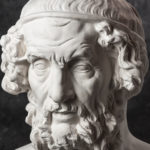
And then there are Homer and Virgil. The Odyssey and the Aeneid are, at their core, stories about human beings who hear the call of the horizon and answer it, at great cost and with great courage. Odysseus is not the patron saint merely of ancient Greek sailors; he is the patron saint of every human being who has ever looked up at the stars and felt the pull of elsewhere (in his case, back home). To stop teaching Homer is not simply to deprive students of old books. It is to begin the long process of forgetting why exploration matters in the first place—why the difficulty is worth it, why the risk is worth it, why any of it is worth it.
I am aware that these statements may sound abstract to administrators facing real budget shortfalls. But I think they are, in fact, urgently practical. We are in the early stages of a civilizational project of almost incomprehensible ambition: to become, eventually, a multiplanetary species. The engineers, physicists, and astrophysicists will get us there. I have no doubt about that. But what kind of civilization do we want to bring with us when we go? That is not a question that STEM can answer. It is a question for the humanities.
This brings me, finally, to Italian, perhaps the most quietly devastating of the programs that Syracuse has marked for elimination. I have been thinking (and writing) a lot lately about Dante Alighieri, who ended each of the three books of his Divine Comedy—Inferno, Purgatorio, Paradiso—with the same word: stelle, or “stars.” It was not a coincidence. Dante was telling us something about the direction of the human journey: upward, outward, and toward the stars—ad astra. As I write in my forthcoming book, Dante’s Guide to Life, this was his way of reminding us that the stars are where our destiny lies. Think about what this means structurally. Dante begins his journey at the very bottom—in the pit of Hell, as far from the stars as a human being can go. He then climbs, painfully and slowly, up the mountain of Purgatory. And he ends by ascending through the celestial spheres of Paradise. At each stage of this journey—at the end of Hell, at the end of Purgatory, at the end of Paradise—he looks up and sees the stars. They are his compass, his destination, his hope. Dante is telling us that no matter how deep in the darkness we find ourselves, the stars are always there, always calling us upward and outward. He is telling us—seven centuries before the Wright Brothers, eight centuries before Apollo 11—that the human story does not end on this earth. It ends, if it ends anywhere, among the stars. To stop teaching Dante is to stop teaching that lesson. And at the very moment when we are, quite literally, reaching for the stars, it would be a strange and disappointing time to do so.
To cut ourselves off from Dante, from the classics, and from the languages and literatures that have carried humanity’s deepest wisdom across the centuries, is not a budgetary decision. It is an anthropological one.
To cut ourselves off from Dante, from the classics, and from the languages and literatures that have carried humanity’s deepest wisdom across the centuries, is not a budgetary decision. It is an anthropological one. It is a decision about what kind of beings we are. The question of what it means to be human—what we are for, what we are reaching toward, what obligations we carry to one another—is precisely the question that the humanities exist to ask and to keep alive. When we study the classics, we are not merely memorizing old texts. We are apprenticing ourselves to the long conversation that human beings have been having across millennia about what makes a life worth living and a civilization worth building. To eliminate that conversation from our universities is to produce graduates who know how to do extraordinary things but have never seriously been asked why they should do them. A civilization that can engineer a rocket capable of escaping Earth’s gravity but cannot articulate why the journey matters is a civilization that has answered the question of means while abandoning the question of ends. And a civilization without a sense of its own ends—its own purpose, its own vision of the good—is not a civilization that is ready to carry its values into the cosmos. It is merely a civilization that has learned, very impressively, how to go fast, but not much more than that.
Yes, it is science and engineering and staggering feats of human ingenuity that will carry us to the moon, to Mars, and beyond. No one disputes this. But it is the humanities—the Odyssey, the Aeneid, and Dante’s Divine Comedy—that tell us why we are going there. They are the roots of the very tree we are now trying to grow to the sky. Why cut those roots off now at the moment when we’re most in need of them?
A civilization that can reach the stars but has forgotten why it wanted to in the first place is not a triumphant civilization. It is a lost one. It is a body without a soul. Is that really the kind of civilization we want to be?