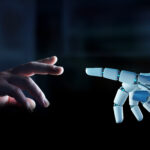
AI-generated art may not be the most disquieting thing about the rise of artificial intelligence in virtually every industry, but it’s pretty disquieting. The New York Times recently published an interview with AI “actress” Tilly Norwood, a computer avatar that has appeared in numerous video clips. AI-written books are flooding Amazon and other marketplaces. An AI-created country music song topped the charts last year. It’s easy to imagine a world where the ease of making AI art wins out, and AI ends up generating the lion’s share of our books, movies, music, and other artistic creations.
This would be a tragedy on multiple levels. First, it would probably put large numbers of human creators out of work. Second, because the statistical models underpinning AI gravitate toward the most common words and images, a world of AI art could easily become a world of bland mediocrity instead of artistic genius. Third, part of what makes art so transcendent and valuable is the emotional communion between the artist and the audience. That communion is lost when the “artist” is a computer model.
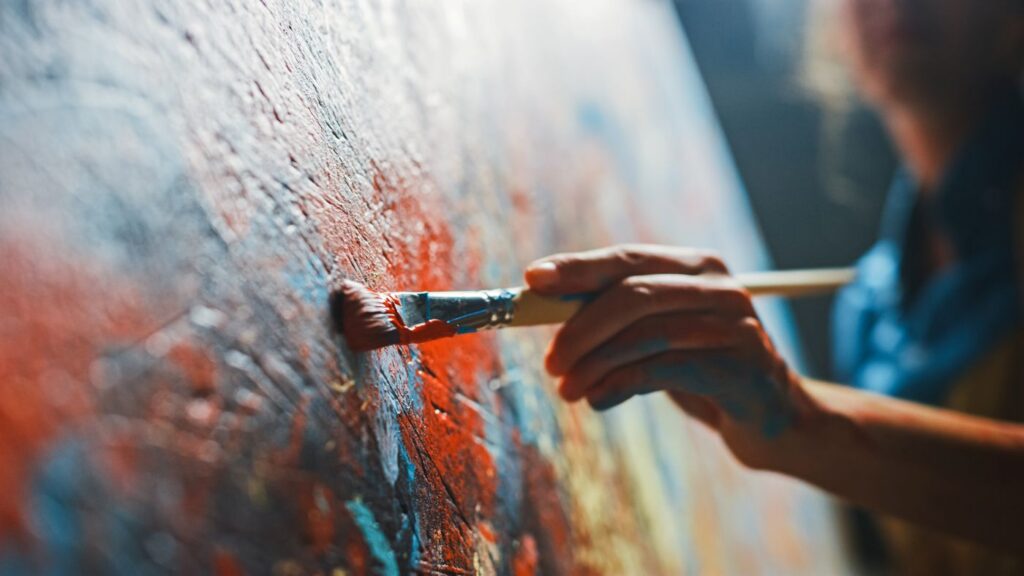
This is serious. As multiple scholars and commentators have argued, producing art is a part of what makes us human. The ability to tell stories, represent objects in pictorial form, and convey emotion through music is a foundational part of humanity. If we outsource this creative fire to machines, we’d be losing a precious part of ourselves.
Disquieting as this all is, it’s not inevitable. As a society, we really can “just say no” to AI art. History is littered with examples of technologies that promised efficiency and/or pleasure, but that were ultimately rejected because we didn’t like what they might do to our humanity. AI art could meet the same fate.
Technology Doesn’t Always Win
Start your day with Public Discourse
Sign up and get our daily essays sent straight to your inbox.Consider TV dinners. In the early 1950s, the rise of the television combined with advances in food processing made it possible for families to eat prefabricated frozen dinners while huddled around the television set. TV dinners were heralded as the next big thing in home economics. A social scientist in 1955 could easily project that TV dinners would become nearly universal, given how they used the latest technology to fuse convenience and entertainment.
But that’s not quite how things turned out. Instead, some twenty-first century studies “found that between a quarter to one-third of family meals are eaten in front of the TV.” That’s still too high, but it’s a minority. Many decades after TV dinners entered the culture, they have not conquered the culture. In fact, particularly among educated Americans, I’d argue that TV dinners are viewed as distasteful and lame. The social science supports this instinct: family dinners, unmediated by screens, “offer an especially valuable chance for family members to come together to share the day’s highs and lows, discuss personal issues, current events, and big questions of the day, and generally enjoy each other’s company,” writes Glenn T. Stanton in the Daily Citizen. The failure of TV dinners to conquer the culture is just one example of society resisting a technological “advance” that may have once seemed inevitable. People saw what it looked like for a zonked-out family to eat pre-fab food in front of the TV, and they didn’t like what they saw. It didn’t seem pro-social or human.
There also are more recent examples of society discarding a technology on the grounds that it didn’t seem human. Consider, for example, the tragicomic failure of Google Glass. When it launched fourteen years ago, it was easy to imagine that most people would soon be going about their lives with Internet-enabled eyewear filtering and augmenting everything they saw. Instead, Google Glass became viewed as creepy and disquieting. Even a generation comfortable with smartphones viewed the technology as a bridge too far. In the bright dawn of 2026, almost all eyeglasses and sunglasses are still of the analog, low-tech variety.
Next, consider social media. A decade ago, social media seemed poised to conquer the world, but that’s no longer the case. As the economist and blogger Noah Smith wrote in December 2025, “worldwide use of social media appears to have peaked for all ages in the early 2020s, and is now in decline … this is probably being driven by a general realization among young people that social media use is unhealthy.” People didn’t like what the rage-bait, peacocking, and oneupmanship of social media was doing to their humanity. So they’re starting to turn their back on it.
Finally, consider one of the most powerful and disturbing technologies of all: human cloning. It’s been more than thirty years since Dolly the sheep proved the technical viability of mammalian cloning from an adult cell. Yet in those thirty years, human reproduction has not shifted to cloning. Instead, we’ve decided that this technology is fundamentally anti-human, and we’ve abjured it. This was a social choice we collectively made.
We could make the same choice for AI art. We could collectively decide that it’s lame, or disquieting, or inhuman to consume art produced by an AI algorithm. We could choose not to watch AI movies, not to read AI-written books, not to listen to AI-created music. There’s nothing stopping us from making this choice.
The ability to tell stories, represent objects in pictorial form, and convey emotion through music is a foundational part of humanity. If we outsource this to machines, we’d lose a precious part of ourselves.
Not All AI Is the Same
This is not necessarily a Luddite cry to abandon all AI. Indeed, there’s an important distinction to make between AI art and AI science. In the scientific realm, the potential upsides of AI are so tantalizing and vast that it may be best to press forward, albeit with the best guardrails we can devise. In the biomedical realm, for example, AI-enabled breakthroughs may help cure cancer or other diseases. In the realm of materials science, AI may usher in new featherlight metals that change industry for the better. In the realm of physics, AI may crack the code of nuclear fusion, giving us a future of clean and abundant energy.
By contrast, it’s hard to see an equivalent upside of AI art. Rather than curing cancer or heralding clean-energy breakthroughs, AI art seems poised to usher in a world of slop videos and derivative novels. And even if that projection is too pessimistic—even if AI creates high-quality artwork—part of what makes art so valuable is the very fact that it’s created by humans. Art is a reflection of our shared humanity. Turning it over to the machines would impoverish our society and culture, no matter what the machines come up with.
Indeed, throughout human history, the power of art has been inseparable from its human creation. Homer’s epic poems are so popular because they’re cherished stories created and preserved by generations of ancient Greeks. They represent the genius and continuity of Greek culture. A Homeric-style epic created by an AI bot would not have the same resonance. At best, it would read like a pale imitation.
The paintings of the High Renaissance are similar. Their religious and classical themes reflect human artists at a particular moment in history, as medieval Christianity was being challenged by more “rationalist” thought inspired by the classical world. The paintings of Michelangelo and Leonardo da Vinci evoke their human creators who were wrestling with faith and rationalism. An AI bot would not experience the same struggle and could not create works with the same emotional charge.
We don’t want a world where future Homers and Michelangelos are replaced by AI bots. That would be a vastly diminished world. And again: when it comes to AI, society has the power to choose our own future. The tech barons may not like it, but we really do have this power. Thus, we can choose to reject AI art. I think we should make this choice.