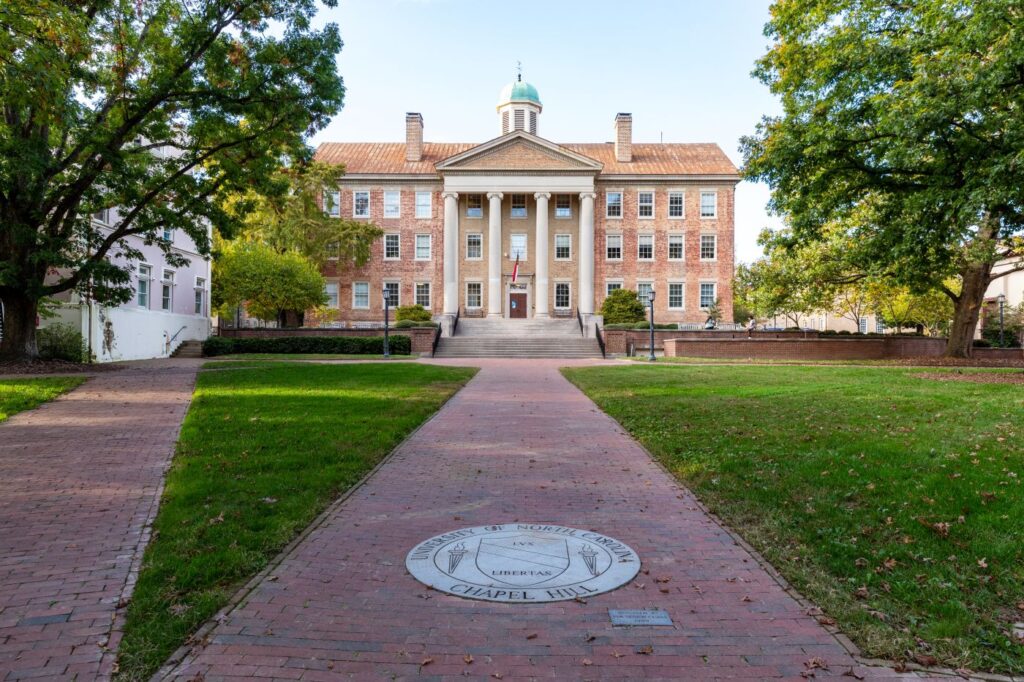
This summer, Columbia University agreed to pay $221 million in penalties and take measures to combat antisemitism and police admissions practices. The University of Pennsylvania apologized for permitting biological males to compete in women’s sports. The University of Virginia’s president resigned in response to Department of Justice pressure. Brown University paid a $50 million penalty, restored biology-based gender norms, and eliminated race-based preferences. Harvard University may be finalizing a big-dollar settlement to unfreeze billions in federal funds.
And the hits keep coming. The size, scale, and aggression of the Trump administration’s higher education agenda really is something new—though, crucially, it builds on precedents pioneered by the Obama and Biden administrations.
What to make of all this?
On one hand, the colleges had it coming. America’s four-year colleges embraced politicization and bureaucratization, smugly confident that the bill would never come due. Campus leaders expected taxpayers to underwrite research and a massive, money-losing student loan operation, even as they took partisan stances, embraced racial preferences, charged staggering overhead rates on taxpayer-funded research, created “bias response teams” that investigated pro-Trump sidewalk graffiti while excusing anti-Semitic harassment, and accepted enormous sums from shady foreign actors.
College leaders never really imagined they’d be held to account, brushing off concerns about ideological homogeneity, academic self-indulgence, and campus partisanship. They laughed off the Spellings Commission during George W. Bush’s second term and easily fended off a congressional push to reduce research overhead rates during Trump’s first. They seemed to regard public largesse as an entitlement. Meanwhile, these same leaders placidly accepted the Obama administration’s weaponization of civil rights law, welcoming a #MeToo-inspired campaign that used “informal guidance” to establish kangaroo courts for allegations of sexual assault. When Secretary of Education Betsy DeVos gamely tried to restore due process rights via traditional “formal rulemaking” during Trump’s first term, campus officials dragged their feet—or joined the smear campaign that deemed her a “rape apologist” for her troubles.
Start your day with Public Discourse
Sign up and get our daily essays sent straight to your inbox.The worst part? Most college leaders didn’t even mean it; many of higher education’s offenses boil down to virtue-signaling, convenience, and self-preservation. Off the record, college presidents would concede that things had gone a little too far and would assure everyone that they were working on it. Campus officials were just trying to avoid inciting the ire of the vocal, influential woke fringe.
Things really went off the rails during the Biden administration. Seeking to push student loan forgiveness, the Biden administration more or less conceded that college had become one big taxpayer-subsidized grift. Race and gender ideology on campus eventually imploded, and the troubling side of DEI was exposed. The wild activism of the campus left skyrocketed after Hamas launched its barbaric assault on Israel.
It was clear that a course correction would require external pressure. Indeed, plenty of college leaders (quietly) concede the need for change and appreciate that Trump’s assault has empowered the mass of academic centrists, who now have cover to push back on pressure from forceful leftist ideology, and those who promote it—even knowing they’ll be denounced as “bigots” and “transphobes.” In short, higher education’s comeuppance was overdue, well-deserved, and necessary. This should be a zippy tale of schadenfreude. And yet, because ours is a nation of laws, there’s far more to it.
Now, I want to emphasize that the Obama and Biden teams repeatedly bent higher education law for political purposes, while the Bush administration and Trump 1.0 hesitated to wield their full legal authority. That’s why officials in Trump 2.0 have a point when they argue that they’re simply rebalancing the scales. After all, they say, Democrats forced out for-profit college presidents. Democrats effectively rewrote Title IX via informal guidance to reflect transgender orthodoxy. Democrats used Biden’s executive order on “equity” to rewrite requirements for federally funded research.
The trick, of course, is that Team Trump is not just rebalancing the scales. Rather, they’ve taken the Obama-Biden playbook and supersized it, trampling the rules that provided guardrails against the Obama-Biden depredations. They’re stripping away the norms and practices that can insulate campus research, teaching, and discourse from the vagaries of the executive branch. Kenneth Marcus, who headed the civil rights office in Trump 1.0’s Education Department, has noted: “The Trump administration is really saying they’re not going to use the same procedures used by prior administrations because we have an exceptional circumstance here.”
There are at least four ways in which Team Trump is operating in novel ways, however.
First, they’ve trampled the established process for investigating and addressing campus malfeasance. The statutory process—which includes investigation, reporting, an opportunity for the institution to respond, and a chance for the institution to come into compliance—has been effectively ignored by the Trump administration. The ad hoc, secretive nature of the process suggests it’s less about enforcing rules than pursuing agendas.
Second, they’ve erased the principle of proportionality. One of the foundations of law enforcement is the notion that punishments should be proportionate to offenses. Instead, Team Trump’s enforcement has featured both unprecedented penalties and a seemingly arbitrary process for deciding who pays. Opacity, heated rhetoric, and moving goalposts mean that no one is sure of either the crime or the appropriate punishment. This risks turning federal enforcement into something more akin to extortion.
Third, they’ve embraced a whole-of-government approach to reshaping higher education. Even when the Obama and Biden teams stretched the federal role, their efforts were mostly confined to the Department of Education. Under Trump, the Departments of Health and Human Services, State, Homeland Security, and Justice are leveraging everything from Medicaid to student visas. This escalation has been highly effective but also promises to make it equally easy for future administrations to do the same. Keep in mind that red-state universities have to worry about research grants, Medicaid, and student visas too.
Fourth, they’ve based their approach on executive orders (especially those regarding DEI and gender), which can be launched and withdrawn with the stroke of a pen. Before President Obama, the expectation was that federal civil rights enforcement would hew closely to longstanding statutory interpretations. Now, the University of Pennsylvania has apologized for its transgender policy from when that policy aligned with NCAA rules and federal guidance. One needn’t be especially prescient to see the problems if each new president can unilaterally, retroactively rewrite federal law via executive order.
We’re better off when the warp and woof of higher education doesn’t depend on the verdict of the electoral college. But respect for institutions requires that they earn our trust.
This moment could’ve yielded a higher education restoration, marked by a recommitment to institutional neutrality, heterodoxy, and free inquiry. A disciplined, law-based approach from Trump 2.0 might have accomplished that. We’ll never know, because we’re instead getting something more ad hoc and personality-driven. The Trump administration is skeptical that internal higher education reforms are sincere. There’s a conviction that higher ed is so far gone that intrusive, root-and-branch assault is the only way to drive real change. There’s the all-too-human desire for payback on colleges that gleefully persecuted conservatives while wading into the white-hot center of the culture wars.
And Trump’s more cynical lieutenants are convinced this is an asymmetrical game—that, when it comes to higher education, the Democrats have no hostages to take and no way to get payback. This shows, I think, the same lack of foresight shown by the Obama-Biden hands who never thought they’d regret weaponizing civil rights law. If you think President Newsom or AOC won’t instruct Secretary of Education Randi Weingarten to go after Western Civilization programs for alleged Title VI violations, shake down red-state flagships, or mandate the restoration of DEI efforts via executive order, you haven’t been paying attention.
But the primary concern is not the consequentialist one (e.g., that the left will respond in kind). In abandoning principled, procedural enforcement for something more ad hoc, the administration is smashing walls that limited Washington’s day-to-day sway over higher education. That’s not a healthy development. If your response is that colleges should have thought about this long ago, before they started treating the federal treasury as a piggy bank, I don’t disagree.
Hence, our conundrum: We’re better off when the warp and woof of higher education doesn’t depend on the verdict of the electoral college. But respect for institutions requires that they earn our trust. Higher education failed miserably on that count, and now we’re all living in the aftermath.
Has the Trump onslaught been worth it? Well, something had to be done. And this certainly qualifies as something. If, a few years out, we see a recalibrated higher education landscape and a commitment to reestablishing the principles of free inquiry and robust campus discourse, then Trump’s boldness will have delivered an unalloyed triumph. If, however, it yields just one more tit-for-tat escalation, in which higher education gets sucked ever more fully into Washington’s maw, then even those of us who thought this well-deserved may come to question the wisdom of the path taken.
Image licensed via Adobe Stock.