From the “very Heart of the Great Anglo-Saxon Southland,” Alabama Governor George Wallace, in his 1963 Inaugural Address, famously summarized his position on one of the most divisive national political issues of his time: “Segregation today . . . segregation tomorrow . . . segregation forever.” A few months after Governor Wallace’s inauguration, a group of civil rights protesters, led by Martin Luther King, Jr., descended on Birmingham in a campaign of deliberate disobedience to the segregation ordinances of one of Alabama’s most racially divided cities. Images of peaceful protesters being sprayed with water hoses and attacked by police dogs soon galvanized the nation, and in April a group of white Alabama clergymen published “A Call for Unity” in a local newspaper, urging civil rights protesters to adopt a court-focused litigation strategy rather than taking to the streets in defiance of local law.
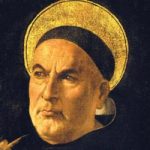
After King was arrested for parading without a permit, he took a moment, from the confines of his jail cell, to pen a response to his fellow clergymen and offer a justification for his resistance to segregation ordinances. Like any civically minded lawbreaker, King faced vexing moral and philosophical questions from the outset: how did he know whether a law was just or unjust, and when, if ever, was it morally permissible to disobey? In his now-celebrated “Letter from Birmingham City Jail,” King’s answer was that “a just law is a manmade code that squares with the moral law or the law of God. An unjust law is a code that is out of harmony with the moral law.” “To put it in the terms of St. Thomas Aquinas,” King explained, “an unjust law is a human law that is not rooted in eternal and natural law.”
Those who praise the modern civil rights movement, but who also want to keep morality and theology absent from public discourse, seldom mention King’s reliance on natural law in his justly famous letter. Scholars such as the late John Rawls were at great pains to show how their thoroughly secularized theories of justice and public reason could make room for King, but in fact they could do so only at the cost of minimizing the seriousness of King’s argument. The son and grandson of Baptist preachers, King had studied the Western philosophical tradition while completing his doctorate in philosophical theology at Boston University, and his defense of civil disobedience drew from the work of Thomas Aquinas in particular.
Human ordinances, Aquinas argued in his Treatise on Law, can be contrary to the human good—and therefore unjust—by way of their end, author, or form. The first mode of legal injustice, according to this schema, is a law designed to bring about private gain at the expense of other members of the community. Otherwise benign laws can also be terribly unjust if made by someone without legitimate lawmaking authority or enforced in an illegitimate or partial manner. King, of course, had in mind Jim Crow laws when he spoke of legal injustice, but the concrete examples he marshaled in his letter followed the general contours of Aquinas’s natural law theory.
First, King suggested, “a code that a majority inflicts on a minority that is not binding on itself” is unjust, because the end of the law is some private good rather than the good of the community. Second, “a code inflicted upon a minority which that minority had no part in enacting or creating because they did not have the unhampered right to vote” is unjust, because such a law, in a republican regime, was made by an illegitimate authority. The final mode of legal injustice—and perhaps most obvious given King’s arrest for marching without a permit—was “a law just on its face and unjust in its application.” There was of course nothing wrong with requiring permits for marches, but it was unjust, King thought, to specifically deny permits to civil rights protesters in an attempt to silence their message.
Start your day with Public Discourse
Sign up and get our daily essays sent straight to your inbox.Following Augustine and Aquinas, King famously claimed that unjust laws were no laws at all. Rather, they were acts of violence and usurpations of law that damaged the human good and failed to instill a moral responsibility to obey. And yet even in the face of legal injustice, Aquinas cautioned great prudence and forbearance when deciding whether to engage in disobedience. For the sake of avoiding scandal or the breakdown of public order, Aquinas taught, it may be appropriate in many circumstances to simply suffer injustice. Aquinas’s thought on this point seems to be that the good of individuals and communities will often be more secure under an imperfect but stable order than in a broken, unstable, and scandalized community.
Theological concepts play an important supplementary role in King’s case for overcoming the heavy prudential burden against civil disobedience. After offering specific examples to demonstrate why Jim Crow laws were unjust in end, author, and form, King suggested that these laws were also unjust in a much more fundamental sense. Even if some of the procedural aspects of justice were fulfilled, King insisted, these laws would remain “morally wrong and sinful,” because, as he argued, “Any law that uplifts human personality is just. Any law that degrades human personality is unjust. All segregation statutes are unjust because segregation distorts the soul and damages the personality.”
Although the reference to human personality here may seem a bit out of place, King’s comments were rooted in a tradition of philosophical personalism, which emphasized the personal—rather than material—nature of ultimate reality. Under the tutelage of Edgar Sheffield Brightman, Harold DeWolf, and other philosophical personalists at Boston University, King came to believe that ultimate reality was necessarily personal. The philosophy to which King was exposed in Boston buttressed his belief in a personal God, which he had long ago developed as a child growing up in the Christian church. In fact, the “two greatest formative influences on King’s thought and action,” King’s Pulitzer Prize–winning biographer David Garrow notes, were “the biblical inheritance of the story of Jesus Christ, and the black southern Baptist church heritage into which King was born.”
King was, first and foremost, a pastor, nurtured in the Christian tradition and sharpened by his encounter with the classic texts of Western philosophy. His description of segregation ordinances as “morally wrong and sinful” occurred within a theological framework, and his justification of civil disobedience was indebted to the tradition of natural law philosophy. Indeed, the cogency and persuasiveness of King’s letter depend on such controversial and contested theological and philosophical claims.
These aspects of King’s letter provide a challenge to modern theorists who would, as a matter of principle, scrub the public sphere clean of all philosophy and theology. Lest their insistence on a naked public square appear to be merely an unprincipled attempt to silence conservative moral and religious arguments, they must reluctantly exclude much of King, as well. Attempts to erase or diminish King’s theological and philosophical commitments will not do, for although he was famous for declaring that he had a dream, we sometimes forget that his dream was of a world in which “every valley shall be exalted, and every hill and mountain shall be made low, the rough places will be made plain, and the crooked places will be made straight.” One of the most famous passages of King’s most famous political speech comes verbatim from the fortieth chapter of the book of Isaiah, and the original context was a prophetic vision of one preparing the way for the political rule of God.
King is of course the kind of historical figure that practically everyone wants to claim as his own. Reality, however, is often complex, and the truth about King is that his primary motivations, his most fundamental commitments—the very core of his thought—were rooted in a worldview repugnant to many of those who now claim his legacy. Despite his personal failings, many of which have come to light in the years since his assassination, we should remember King for who he was: an imperfect man and a Christian pastor who, in the best tradition of American politics, fought for justice by appealing to a law higher than the state while respectfully and thoughtfully engaging his interlocutors on the principles of a just political order.