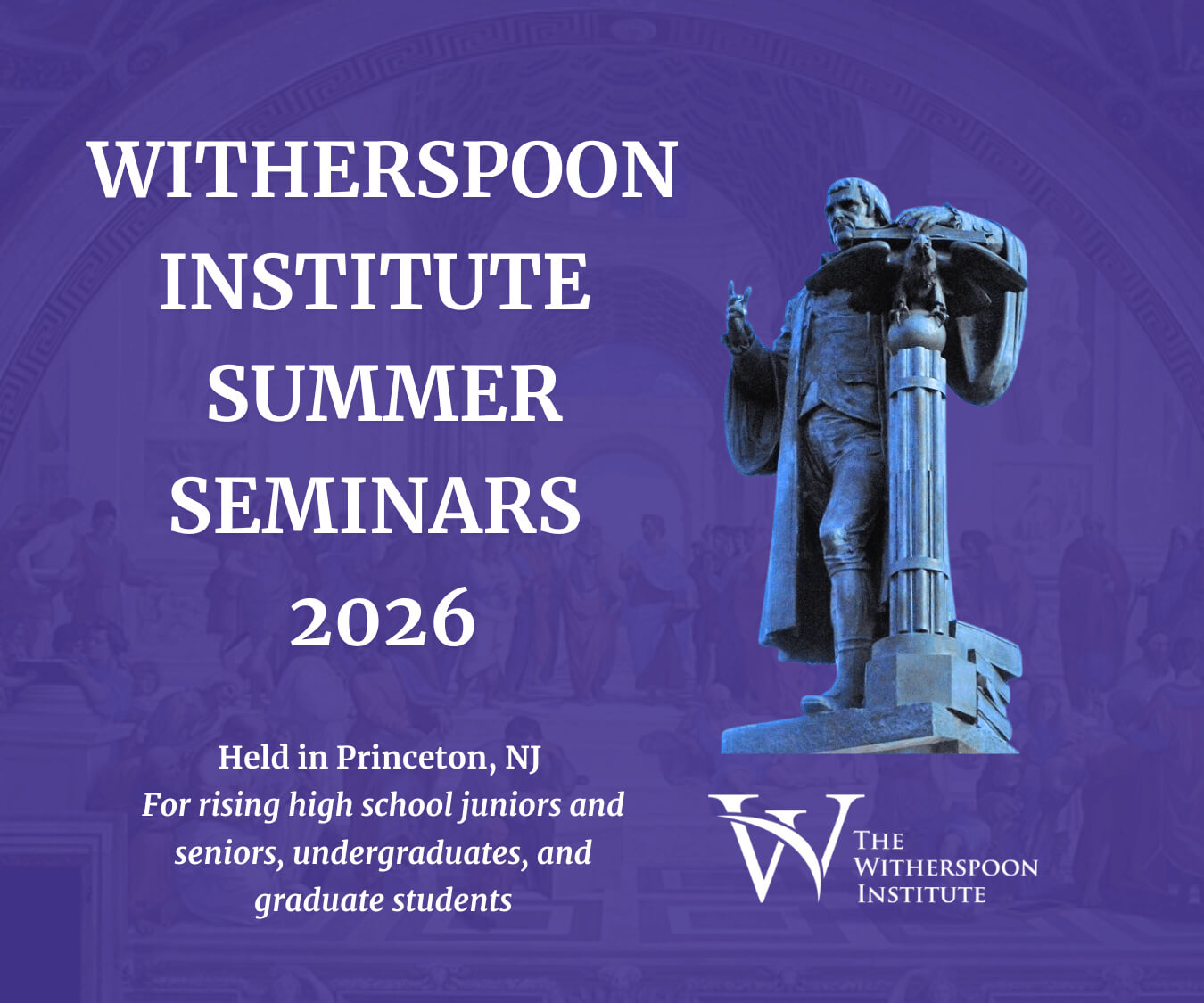
Witherspoon Institute
2026 Summer Seminars
Held in Princeton, NJ
For rising high school juniors and seniors, undergraduates, and graduate students.
Keep up with the conversation! Subscribe to Public Discourse today.
Book Reviews
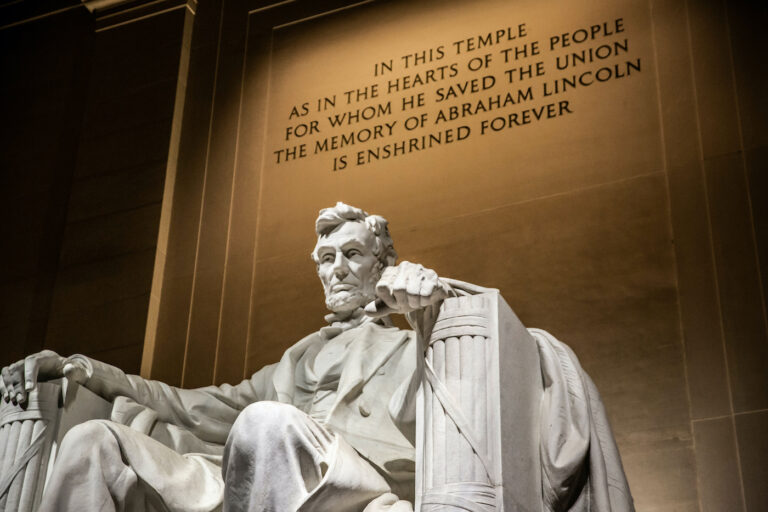
Lincoln saw the fundamental problem in democracy as one single, monstrous question: “Can the principle that liberates all and produces self-government remain disciplined and restrained enough in practice to retain self-government?”
By Samuel Gregg
As a moral framework for assessing regimes in an imperfect world, Nigel Biggar’s Colonialism: A Moral Reckoning has much to recommend it.
By Paul Krause
Fred Kaplan’s new biography of Thomas Jefferson, His Masterly Pen, gives us the Jefferson we deserve: Jefferson the writer, the listener, and the aesthete.
Farr Curlin and Christopher Tollefsen’s The Way of Medicine shows how doctors who are committed to the Way can practice medicine in a manner that restores them to this vocation of healing, even in our pluralistic age.
What continuing, large-scale “nonversion” away from traditional Christianity means for the nation—both presently and in the years ahead—is a huge “macro-level” question. And a pressing question, not just for sociologists and theologians, but for all of us one way or another. Stephen Bullivant’s prognosis in Nonverts: The Making of Ex-Christian America is neither grim nor naïve, not unduly pessimistic or optimistic, but realistic.
James Bradley Thayer sternly taught an iron discipline in constitutional judging of holding one’s own views—even one’s conviction that one understood the Constitution better than the legislature did—firmly in check. And he taught this because he believed it was the only approach consistent with the Constitution’s text, purposes, structure, and traditional interpretation.
Our Constitution’s carefully designed processes for democratic self-governance, and the means and mechanisms for ensuring accountability, are evaded and eroded. In his 2021 book “Purchasing Submission,” Philip Hamburger reveals the many hidden ways this evasion occurs—through spending conditions and contractual terms, yes; but also through “dangerously benevolent” nudges, incentives, intermediaries, accreditation, licensing, permits, and permissions.
Michael Lamb’s A Commonwealth of Hope: Augustine’s Political Thought is an important intervention not only in Augustine studies, but also in our politics of stagnation and hopelessness. Lamb shows that if we hope rightly, we can work in and for the pilgrim city and for earthly cities. Augustine’s descriptions of life’s evils and turmoils should awaken us to life’s uncertainties, our lack of self-sufficiency, and our need for mercy.
By Joshua Katz
Life’s biggest questions are almost never resolved to everyone’s satisfaction, and if we don’t study the differences between the Epicureans and the Stoics, between Locke and Rousseau, and between legal originalists and non-originalists, we are missing out on our own music: sometimes a battle of the bands, sometimes cacophony, always fascinating.