




















Modern films, Victorian literature, and Jewish sages illustrate a religiously grounded, morally mature approach to the classic internal conflict identified by great thinkers from Plato to Freud.
Voting always requires a weighing of consequences. The paramount question for the conscientious voter in 2016 is, “Which outcome among the feasible alternatives will promote the greatest good or prevent the greatest harm?”
High-principled conservatives who would abstain from voting this November rather than vote for Donald Trump embrace a faulty model of political action, which threatens to undermine the resistance to radical liberalism.
In deciding how to vote this November, one should be guided both by political science and one’s conscience.
Is there a moral obligation for the US not to enact Donald Trump’s proposed ban on Muslim travel into the US?
Our interest in the Olympic Games can teach us something about the goodness of playing, and watching, sports.
Voters will not respond favorably to a political party that offers them moral principles—especially principles rooted in the past—without also showing a real concern for their concrete interests.
The war is far from over, but a recent battle in California shows that pluralism, religious liberty, and traditional values can be defended where there is a will to mobilize and resist.
A playbook exists for reversing the slide toward death on demand. It’s time to use Compassion & Choices’ tactics against it.
Rank and file Republican activists and voters revere marriage and will act to defend it. GOP candidates should understand that failing to defend marriage can come at a very high price.
In evaluating potential nominees to the Supreme Court, Republican presidents should seriously consider state supreme court justices. Their independence gives a clearer indication of how they would behave if appointed to the high court.
Some people hope that Pope Francis will change the Church’s teaching on contraception. He won’t. He couldn’t even if he wanted to—as Church history and Scriptures show. Part two of two.
The Catholic Church’s teaching on contraception, common to all Christian denominations for 1900 years, is not arbitrary. It reflects a moral truth. And the Catholic Church can never revise it. Part one of two.
Anyone who hopes to see a major shift among the major parties has to ask himself: when am I going to stop voting for them? If not during the year of Donald Trump and Hillary Clinton, then when?
Radical autonomy does not capture the webs into which we are born, our experiences of deep neediness and equally deep love, our embodied nature, our reaction to tragedies and unforeseen obstacles, or our response to our children once they arrive. Autonomy resists the dependence at the heart of loving relationships.
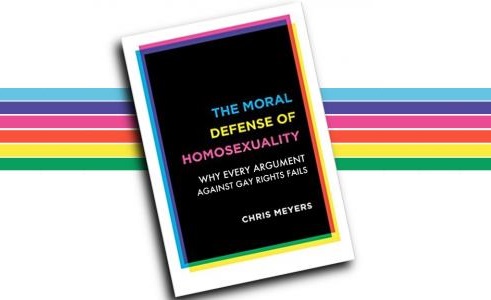
Historically, the modern liberal position has lacked a robust philosophical argument in favor of homosexual activity. A new book by Chris Meyers attempts to provide one.
The conservative should not act the ideologue in order to attack the demagogue, because the simplistic thinking of the ideologue is just as hostile to true statesmanship as the angry passions of the demagogue.
Like John C. Calhoun, who famously embraced slavery as a “positive good,” the abortion movement of 2016 has shifted from seeing abortion as a “necessary evil” to celebrating it as good for women and society.
President Obama has sacrificed the well-being of our nation’s youth on the altar of ideology.
A groundbreaking study of America’s first great political debate under our Constitution provides indispensable political education and guidance for our polarized and confused politics today.
A new book sets out a system of “procreative ethics” based on the idea that life is not a gift but a risk. From this point of view, imposing that risk on someone requires serious justification.
Only when we are willing to hold our own party to the same standards to which we hold the other party will we be able to improve our national politics.
In the age of Clinton and Trump, we need the principles and ideals that animated America’s first president more than ever.
By invoking the principles of the Declaration of Independence, Republicans can wholeheartedly embrace the ideas of integration, inclusion, and respect in a way that remains consistent with their commitments to morality, patriotism, and liberty.
