In his encyclical Magnifica Humanitas, Pope Leo XIV raises concerns about the rapid rise of artificial intelligence, including the danger of allowing computers to make ethical decisions based on a “calculation” of the consequences. (Imagine an AI-controlled drone bombing a village where a terrorist is hiding, because it predicts a 65 percent likelihood that this will save more innocent lives later than it kills here and now.) Pope Leo reminds us that “moral judgment cannot be reduced to calculation, for it involves conscience, personal responsibility and the recognition of the other as a person.” He adds that “it is imperative to cultivate hearts that love the truth, prefer what is right despite the most appealing content and pursue wisdom rather than immediate results.”
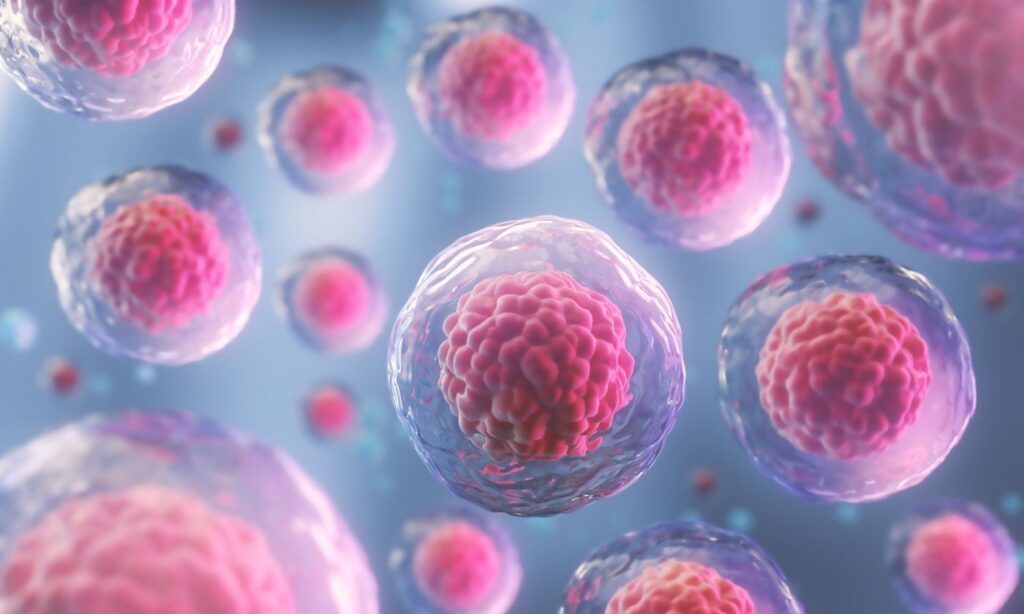
This conflict between calculation and wisdom is relevant to humans as well as computers. A case in point was the decade-long controversy in the U.S. over human embryonic stem cell research.
The Origin of the Controversy
The issue of federal funding for harmful experiments on human embryos was raised soon after the first live birth of a child conceived by in vitro fertilization (IVF) in 1978. Early discussion of the ethical issues proved inconclusive, and no funds were authorized.
A later effort by the National Institutes of Health to authorize the funding was blocked in 1995 by Congress’s approval of the Dickey amendment to the Health and Human Services appropriations bill. It remains in law today. Debate was reopened, however, in November 1998, when Dr. James Thomson of the University of Wisconsin found a way to culture versatile or “pluripotent” stem cells obtained by destroying human embryos. Supporters of research using these embryonic stem cells (ESCs) claimed that funding it would not violate the law: a researcher could use private money to destroy the embryos, then receive federal grants for research on the resulting stem cells, which could provide treatments for many injuries and illnesses. Some spoke of “miracle cures.”
Start your day with Public Discourse
Sign up and get our daily essays sent straight to your inbox.At the first congressional hearing on this discovery in December 1998, senators pressed witnesses to predict how long it would take for those cures to arrive, as they needed that information to overcome moral objections. Researchers balked at doing so when they had scarcely begun the basic research. Finally, one scientist hesitantly said that “In five years, we may begin to see something.” Said the politicians: good, five years to cures, we can work with that.
The Role of the Utilitarian Calculus
The main objection, of course, was the destruction of human embryos. Supporters of federal funding conceded that the embryo deserves some “respect,” but that could be overridden by the enormous potential benefits for born humans. This was a utilitarian argument: An action is right or wrong depending on whether its sum of consequences includes more benefits than harms. Many researchers and biotechnology companies viewed such quantitative calculation as a good scientific way to do ethics. Politicians felt it was a good practical way to proceed without getting into abstractions like human dignity.
Christian and other ethicists had long criticized utilitarianism. They pointed out that it is impossible to predict all future consequences of an action, or even to know which later events are really consequences of that specific action. They also observed that the human goods violated by the action cannot plausibly be placed into a calculus and weighed against consequences that are of a qualitatively different kind. In short, moral judgment is not a calculation but a form of practical wisdom: what one intentionally does here and now may have an inherent moral character that is not rendered null and void by later benefits. As St. Paul had said, we may not do evil that good may come (Romans 3:8).
While I see these criticisms as valid, I also want to raise a different or additional point that became obvious during the embryonic stem cell debate.
Disappointments and Hyped Claims Involving ESCs
It soon emerged that while moral justification for destroying embryos was said to rely on the promise of cures, ESC researchers encountered many disappointments and difficulties. The cells were difficult to control and could form tumors instead of healthy tissues in animal trials. They could also be rejected as foreign tissue, even when researchers later turned to cloning technology (known as somatic cell nuclear transfer) to create a genetic match to the host animal.
Some public claims about these cells’ unique promise were quickly rebutted. When Christopher Reeve testified to Congress that they were essential because adult stem cells cannot be “pluripotent,” it turned out that a published study funded by the Christopher Reeve Paralysis Foundation had begun with the statement that “Pluripotent stem cells have been detected in multiple tissues in the adult,” and had explored using bone marrow stem cells for neurological repair.
Yet proponents made even more careless and extravagant claims. Running for vice president in 2004, John Edwards declared that if he and John Kerry were elected, “people like Christopher Reeve are going to walk,” shortly after Mr. Reeve died. Ron Reagan, son of former President Reagan, declared at the Democratic National Convention that year that ESC research could cure many diseases if conservatives stopped opposing it because of “ideology” and “ignorance.” And former First Lady Nancy Reagan claimed that the research could cure Alzheimer’s disease, from which her husband had recently died. Interviewed about her claim, Dr. Ronald McKay, an expert on neuroscience at the NIH, said it was false; any new brain cells transplanted into an Alzheimer’s patient would be attacked by the same plaques already attacking the patient’s own cells. When asked why public figures were nonetheless promising such cures, he said: “To start with, people need a fairy tale.”
By 2005, after the original five-year prediction of clinical uses had expired, many experts were saying that it might take “decades” for this research to produce a treatment for anything. Among them was James Thomson himself. “Ten or 20 years from now,” he said, “I’m actually currently optimistic that there will be transplantation-based therapies, but even if there was none, and it was a complete failure, this technology is extraordinarily important.”
False claims of breakthroughs nonetheless multiplied, perhaps a sign of desperation. In 2006, Dr. Robert Lanza of the company Advanced Cell Technology claimed in the journal Nature that he could obtain a single cell from an eight-celled embryo without harming it to develop an embryonic stem cell line. Someday this particular child, when born, could have his or her own repair kit ready to treat future illnesses or injuries.
As staff to the U.S. Conference of Catholic Bishops, I was invited to appear on PBS Newshour with Dr. Lanza to comment on whether this could address Catholic moral objections to ESC research. I prepared by studying Lanza’s article and quickly found that he had not done what he claimed. His team had destroyed sixteen human embryos at the eight-celled stage, obtaining four to seven cells from each, then transferred these cells to specially designed Petri dishes. The cell in the center was connected by channels to the surrounding cells from the same embryo, mimicking the cell-to-cell interaction by which an embryo divides up the task of producing the various cell types needed by the developing organism. His finding was consistent with a study from Singapore published around the same time, concluding that embryonic cells are “social cells” that cannot develop normally if isolated from each other. The claim of a nondestructive solution was false. The editors of Nature realized this was the case, and forced Lanza to retract key claims in his article. The next time he testified before senators supporting ESC research, they attacked him for helping to discredit their shared agenda.
Moreover, in 2004 and 2006, researcher Woo-Suk Hwang of South Korea reported that his team had become the first to obtain ESCs from human embryos produced by cloning. That claim turned out to be entirely fraudulent: They had not managed to generate one such cell line, despite using over 2,000 eggs (some of them solicited from the team’s female members), and falsified their results. The journal Science had to retract the articles reporting this supposed breakthrough.
This history of failure, hype, and fraud suggests that a large part of the problem was the utilitarian ethic itself. If it is the ultimate consequences that retroactively justify otherwise unethical actions—if the end is what justifies the means—disappointments invite increasingly relentless efforts to guarantee success (or the appearance thereof) in achieving that end. Even lying may be justified by ultimate consequences. Devotion to such a calculus creates tunnel vision, and supporters may still find that they have not only failed in practical terms but have promoted something that, by their own standard, cannot be morally justified.
What about the role of moral wisdom in this debate? Opponents of ESC research had made moral and policy arguments against it and collected impressive documentation on alternatives such as adult stem cells and umbilical cord blood stem cells. But the truly major breakthrough came in 2006.
Devotion to such a calculus creates tunnel vision, and supporters may still find that they have not only failed in practical terms but have promoted something that, by their own standard, cannot be morally justified.
A Breakthrough for Ethics and Science
That year, Japanese researcher Shinya Yamanaka reported that by adding transcription factors to the ordinary body cells of mice, he had reprogrammed them into stem cells with the same versatility as ESCs. He called them “iPS cells” (induced pluripotent stem cells). He was invited to present at a conference on stem cell research in Rome that year, sponsored by the Pontifical Academy for Life and the International Federation of Catholic Medical Associations (FIAMC). Catholic attendees welcomed his research and encouraged him to pursue it using human body cells, and in 2007, he reported his ability “to generate iPS cells from adult human dermal fibroblasts and other human somatic cells.” His finding was confirmed by none other than James Thomson.
These iPS cells soon dominated the field of stem cell research, making the embryonic variety largely irrelevant to medical progress. They are easier to obtain, raise no moral problem, and by using a patient’s own body cells as the starting point, they solve the problem of tissue rejection. IPS cells and other morally uncontroversial approaches are now featured in reports of clinical progress in this field.
Allow me to conclude with a quote from each of these two researchers. When asked by the New York Times what led him to explore an alternative to ESCs, Dr. Yamanaka said he had considered working with them and visited an IVF clinic at a friend’s invitation. Looking at a human embryo under a microscope there, he had what I am tempted to call an epiphany: “When I saw the embryo, I suddenly realized there was such a small difference between it and my daughters … I thought, we can’t keep destroying embryos for our research. There must be another way.” That way earned him a Nobel Prize in Medicine and Physiology. (Note that Dr. Yamanaka was not speaking as a Catholic, but is said to belong to the Shinto religion. His insight was an intuitive connection with a fellow being he recognized as one of us.)
For his part, Dr. Thomson told The New York Times that “he had ethical concerns about embryonic research from the outset” despite its supposed promise: “If human embryonic stem cell research does not make you at least a little bit uncomfortable, you have not thought about it enough.” He turned his energies to iPS cells and rightly predicted that other researchers would do so. Regarding the long debate about destroying embryos, he said: “A decade from now, this will be just a funny historical footnote … Isn’t it great to start a field and then end it.”
It was that old moral wisdom on respecting life at all stages that led to the most promising and innovative scientific solution to the problem. It was utilitarianism that proved not to be useful.
A version of this article was presented in October 2026 at the annual Fall conference sponsored by the de Nicola Center for Ethics and Culture at the University of Notre Dame, “Wisdom from Age to Age.”