In law, we are always counting time. What year was the law enacted? Which precedent is older? Or more recent? How many times has it been reaffirmed, and when? When was it overruled and for how long did it last? Is this statute retroactive or only prospective? Will it sunset, or will it continue into the future? We do this in constitutional law, too. We think the date of our Constitution’s enactment is significant. Or we ask how many constitutional “foundings” there were and when they happened.
“Time immemorial” is yet another concept in American law that provokes questions about law’s relationship to time. Sometimes, especially in English common law, time immemorial is described as a distant, mist-hung “time out of mind,” or a time “whereof the mind of man runneth not to the contrary.” Like many features of English law, time immemorial was transplanted to the United States and has played a significant, if subtle and perhaps underappreciated, role in our constitutional law. But the concept of time immemorial is also very much unlike some of the other ways we think about time in the law. What are the assumptions latent in law’s “time immemorial”?
Time Immemorial in English and American (Constitutional) Law
“Time immemorial” breaks apart human memory from historical time. There are antecedents for this separation in theological sources. St. Augustine, for example, in Book XI of the Confessions, discusses time as intimately connected to the human mind—a subjective view of time that gained even the grudging admiration of Bertrand Russell. The very process of thinking (of whatever kind, whether remembering, calculating, hoping, predicting, and so on) occurs within time, so any conclusions about temporality depend on the nature of our mental faculties. We can know the past only as present memory, the present as present awareness, and the future as present expectation. On the other hand, in the City of God, Augustine observes that God created time at the same time as He did the universe, and since human beings did not exist at the universe’s inception, time must be something that exists outside the subjectivity of human memory. If time were entirely subjective, the multitude of human souls would mean that there is a multitude of memories, and so also of times.
This internal debate within Augustine’s writing finds an echo of sorts many centuries later in English law. Consider the objective time (the time out of mind) of the common law. From the seventeenth century on, the English common law relied extensively on the time of “immemoriality.” The origins of the common law were said to reach back to a time “beyond the memory of man.” J. G. A. Pocock has argued that the time of “immemoriality” set the common law beyond remembering, beyond the subjective memory of any person, giving it an authority that it could not otherwise have. Common lawyers could claim a diffuse, imprecise, and mysterious antiquity for the common law—one that gave it a higher status and wisdom than the ordinary positive law, the law of kings, first, and of legislatures, later, whose time of origin could be fixed and so remembered.
Start your day with Public Discourse
Sign up and get our daily essays sent straight to your inbox.American lawyers claimed this English concept of immemoriality for their law from the beginnings of the republic at least through the nineteenth century. Relying on and adapting William Blackstone, they saw the common law as an inherited body of “immemorial” doctrine that required some degree of fidelity because of its antiquity. Blackstone would write in the eighteenth century that custom has “binding power, and the force of laws” to the extent that it enjoys “long and immemorial usage” and “universal reception throughout the kingdom”; that such qualities made the common law “the perfection of reason … it always intends to conform thereto, and … what is not reason is not law”; and that the common law was consistent with “English liberty” because it arose through “the voluntary consent of the people.”
The common law judge was uniquely privileged, far more than any elected legislature, to “read” the community that presented itself to him in his courtroom. When the common law judge spoke, in other words, the common law corresponded to the actually existing state of the community, and connected to the law governing human community as such.
It was in this way that time immemorial made its way into constitutional law as well. True, constitutional law is not formally a common-law subject. But the substance, the methods, and (if I may put it this way) the spirit of the common law have penetrated American constitutional law deeply. From the time of the Constitution’s enactment to the present, the common law has been an integral mode of governance and public discourse in American constitutional law. We are sometimes told that America wanted to break with its European past. But in reality, in contrast to the concerted effort to uproot all traces of the past that took place in revolutionary France, the common law was widely celebrated in our own foundational law. And with it, the concept of time immemorial.
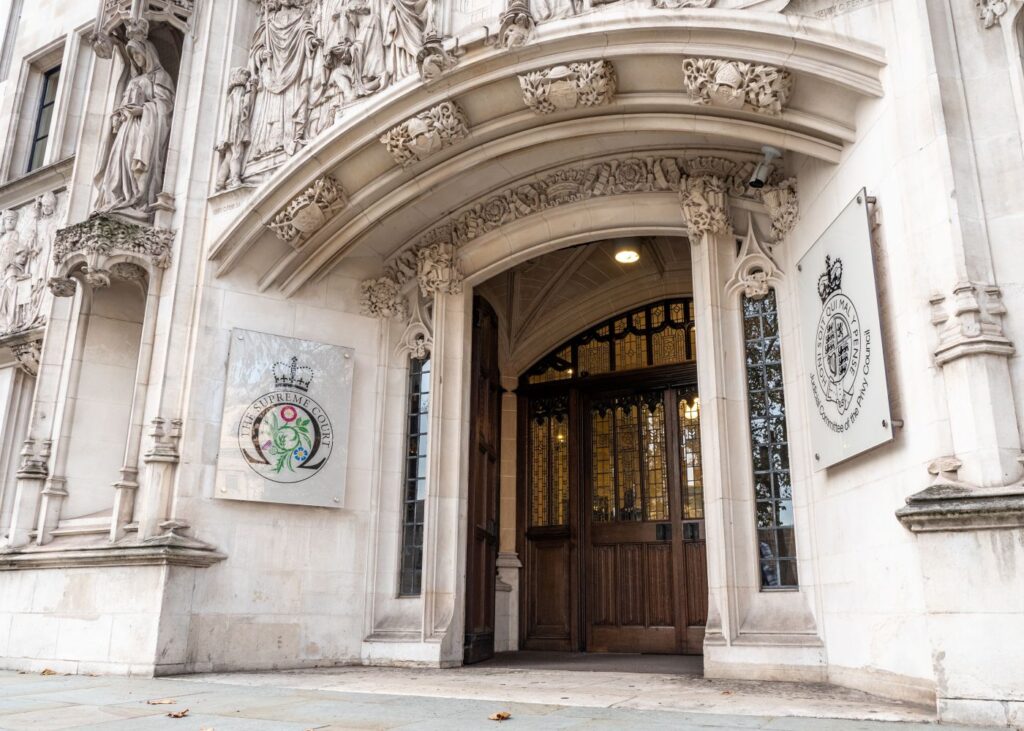
Consider only a few areas where it appears in American constitutional law. In its First Amendment public forum doctrine, which specifies rules for different property categories, the Supreme Court has said: “Wherever the title of streets and parks may rest, they have immemorially been held in trust for the use of the public and, time out of mind, have been used for purposes of assembly, communicating thoughts between citizens, and discussing public questions. Such use of the streets and public places has, from ancient times, been a part of the privileges, immunities, rights, and liberties of citizens.”
In an assortment of cases spanning the Bill of Rights, the Court refers to a practice’s “immemorial[]” antiquity, or its existence “time out of mind,” or its endurance “[s]ince ancient times.” These rights, the Court has said, are “not intended to lay down any novel principles of government, but simply to embody certain guaranties and immunities which we had inherited from our English ancestors, and which had, from time immemorial, been subject to certain well-recognized exceptions, arising from the necessities of the case.” In these cases, it is worth noting, the Court does not trace the origin of these provisions or their limitations to any particular historical period at all.
In its law of Indian tribal and aboriginal sovereignty, the Supreme Court describes native sovereignty over land as governed by the standard of “time immemorial,” and it does the same in cases concerning the true nature or essence of geological phenomena, as it once did in resolving an interstate dispute over the Arkansas River: “From time immemorial, the existence of a single continuous river has been recognized by geographers, explorers, and travelers.” In describing the President’s pardon power, Chief Justice Marshall observed early in our history that “[a]s this power had been exercised, from time immemorial, by the executive of that nation whose language is our language, and to whose judicial institutions ours bear a close resemblance; we adopt their principles respecting the operation and effect of a pardon, and look into their books for the rules prescribing the manner in which it is to be used by the person who would avail himself of it.” And when the Court considers an attribute of civilized government so obvious that it need not be stated—the power to regulate means of locomotion, for example—it reaches for “time immemorial” as self-evidently justifying.
In old cases and new, in rights cases and structure cases, and in cases spanning an enormous disciplinary range, we see the Supreme Court relying on time’s immemoriality. It is used with sufficient frequency that we might rightly wonder whether it is merely a meaningless flourish or an empty piece of rhetoric. But how can we understand it?
Ancientry
One rather straightforward feature of time immemorial is that it seems to be about something—some right, or course of conduct, or power, or geological structure (our conceptions about the true nature of a river, for example), or set of facts in the world—very, very old. In fact, not just old, or the product of historically remote actors, but immemorially old: the phenomena to which it refers are datelessly ancient, existing only in “time beyond memory—beyond, in this case, the earliest historical record that could be found. This is the doctrine or myth of the ancient constitution…”
As Pocock observes, the ancientry of the immemorial is mythical, rather than merely historical. It is meant to connect the real, everyday practices that we see in our humdrum law today to a time in the cosmic great beyond, when human beings were not conscious of marking time in the way they are today. And this gives the legal immemorial a metaphysical quality in its age that is somehow different in kind from the enactments of ordinary positive law, whose dates individual human beings can know for themselves and record in little ledgers of their own making. In time immemorial, we refer perhaps to God’s memory, or to that of the gods. Hesiod tells us that the goddess Mnemosyne, personification of memory, is the mother of the Muses. She is omniscient, knowing all that has been, all that is, all that will be. Poets inspired by the Muses draw directly from Mnemosyne’s store of knowledge. The Muses sing, Hesiod says, beginning with the beginning—of the genesis of the gods, the first appearance of the world, and the birth of humanity. And they actually sing about laws and customs! “Their lovely voices celebrate the laws and customs of all the immortals in the songs they send forth.” In divine memory, we deal not with the past as whatever came before the present, but as one with it. We do not remember it. We only acknowledge its primordial reality and our connection to it.
In time immemorial, we are relying on age outside of human memory as in some sense authoritative or normative. I call this attribute ancientry, the view that the myth-making quality of antiquity and its capacity to connect humanity across ageless time, a time without mind, is valuable for us.
Eternity
Time immemorial is not only ancient but also somehow timeless. It gestures at a past beyond human memory not to fix time (how could it do that if human memory cannot recall the time of its origin?) but to suggest a kind of eternal state encompassing our todays and tomorrows. To borrow from T. S. Eliot, time immemorial is time present and time past, which are both present in time future.
Because the law of time immemorial has no precise time of origin, it can change. Its historical elusiveness gives it a suppleness and an adaptability that the hard reality of datable facts does not enjoy. The common law changed so insensibly, it was maintained, that it could never be seen to change. “The laws enacted by prince or parliament may grow obsolete,” writes Pocock, “but custom must always be perfectly up-to-date, since if it had proved inadequate to the problems of the present age the people would simply have abandoned it.”
If rationalized, part of the logic of the value of immemoriality may be that a universal and commonly unquestioned practice of great antiquity may be not merely some random spandrel, but may confer, through whatever mechanism, real evolutionary or survival advantage on those who engage in or respect that practice. If instead spiritualized, immemoriality evokes something of St. John Henry Newman’s insight that here on earth, to live is to change, and to be perfect is to have changed often. In the case of the law of custom, of tradition, of the common folk, it changes to remain what it was. Compare a very old statute or a regulation about some technology that is rapidly being outrun by current developments. That law must be formally repealed when it grows stale, but instead we see that it often lingers on for decades or centuries—inutile, inactive, ignored, and eventually forgotten.
Through time immemorial, we re-enchant our legal past, seeking in a small way, in a small corner of our lives, to counteract the powerful forces of disenchantment that Max Weber first described so acutely. Consider how something like the story the philosopher Charles Taylor tells would apply to the law. For Taylor, in the epoch of enchantment, the boundary that separated our world from the sacred was porous and indistinct. “Disenchantment” began as an internal religious development, and not, as is often thought, as an external superimposition. As the Church rationalized doctrine, it exerted control and mastery over the spirit realm; there was only the “disciplined” and segmented self, as societies became open to the possibility of an exclusive humanism. Having left the enchanted universe behind, we disenchanted dwell within the metaphysical bounds of an “immanent frame”: the world as apprehended through reason and science, bereft of immaterial and unquantifiable forces.
A similar story could be told for law, though as usual law lags behind, and it has been told in accounts of natural law’s demise in the nineteenth century. Time immemorial is a holdover from that earlier, enchanted world, whose bugbear in the law was Oliver Wendell Holmes, Jr. There is an assumption in time immemorial that there is a normative order—the order of the natural law—that we did not create. To say that some idea or custom has existed from time immemorial is to associate it with that normative order. That this association persists even today is a testament to that normative order’s confounding hold on us, notwithstanding the best efforts of Holmes and his epigones to throw it off.
Unwritten, and Perhaps Unspoken
English law was once at least in part jus non scriptum and the function of the courts was to declare the ancient custom of the realm. What can we take from the unwrittenness of laws whose time is beyond memory? There are some things among a cohesive social group that are so clear or so obviously true or correct that they do not need writing, or maybe even saying. These truths are the basic matters, the fundamentals, the core assumptions, the can’t-helps, that ground the group and give it its sense of identity and amour de soi. So plain that they need not be stated. In some ways, the invocation of time immemorial is something like what legal scholar Brian Murray has called, and scholars Will Baude and Richard Re have criticized as, the appeal to “common sense.” As the political scientist Jeffrey Friedman put it, “‘common sense’ is objectionable … because, given the fallibility of our mechanisms of perception and interpretation, we can never be sure that what we think of as ‘obviously true,’ or as a matter of common sense, really is true.” Yet while common sense seems to be rooted in some concept (real or imagined) of present-time consensus, time immemorial refers to a (real or imagined) consensus of past, present, and future time—a consensus of the dead, the living, and the unborn. This is a comparatively ambitious claim of consensus, and in law, we should be cautious about it: the speech the Supreme Court protects in “traditional public forums” today, for example, actually greatly exceeds what was allowed in public spaces historically.
Already we see a tension in whatever time immemorial may be doing and some of the ambitions of the predominant interpretive theory of contemporary American constitutional law—originalism. The originalist object is to fix the meaning of the words of the Constitution at the time of ratification. As time recedes backward, the happenings of the past will matter less and less to the originalist, because they will have less relevance for the words’ meaning. But if time immemorial is a concept not so much historical as mythical, then either the Court is using it for mere rhetorical panache (always a real possibility), or it has some other purpose in mind. Even if it is “mere rhetoric,” it is not so clear that the rhetoric is as “mere” as all that. Rhetoric is only effective when it appeals to something important or real. At any rate, it makes little sense for the Supreme Court to invoke time immemorial if its object is to fix the original meaning of the text. When the Court appeals to immemorial time, it seems not to have the text much in mind at all, but something like the cultural and political assumptions that made the production of a foundational legal text possible.
Indeed, the association of ancientry, eternity, unwrittenness, and identity in time immemorial all help to explain Pocock’s observation that “the adjective ‘ancient’ was used little less often than ‘fundamental’, was frequently coupled with it and (it may be suggested) could in the majority of cases have been substituted for it without serious loss of meaning. The fundamental law or constitution was an ancient law or constitution; the concept had been built up by the search for precedents coupled with the common-law habit of mind that made it fatally easy to presume that anything which was in the common law, and which it was desired to emphasize, was immemorial.”
Pocock’s dark adverb—“fatally”—suggests some of the dangers in invoking time immemorial. We may be imagining something untrue, pretending that we share a past that we do not. We may be exposing our constitutional culture to the abuses of con men, hucksters, and fabulists. But there is an opposite danger, and it is just as real and holds powerful temptations for constitutional theorists today: the assumption that a society can exist without myths, without origin fables, without commonalities, with little sense of its identity. As if linguistic gymnastics, skill in the interpretation of words, and cleverness in legal argument can alone hold a constitutional culture together. The stubborn persistence of time immemorial in a time when it should, by rights, long ago have ceased to be in constitutional law, tells us something crucial about what binds a community to its law. We should listen.