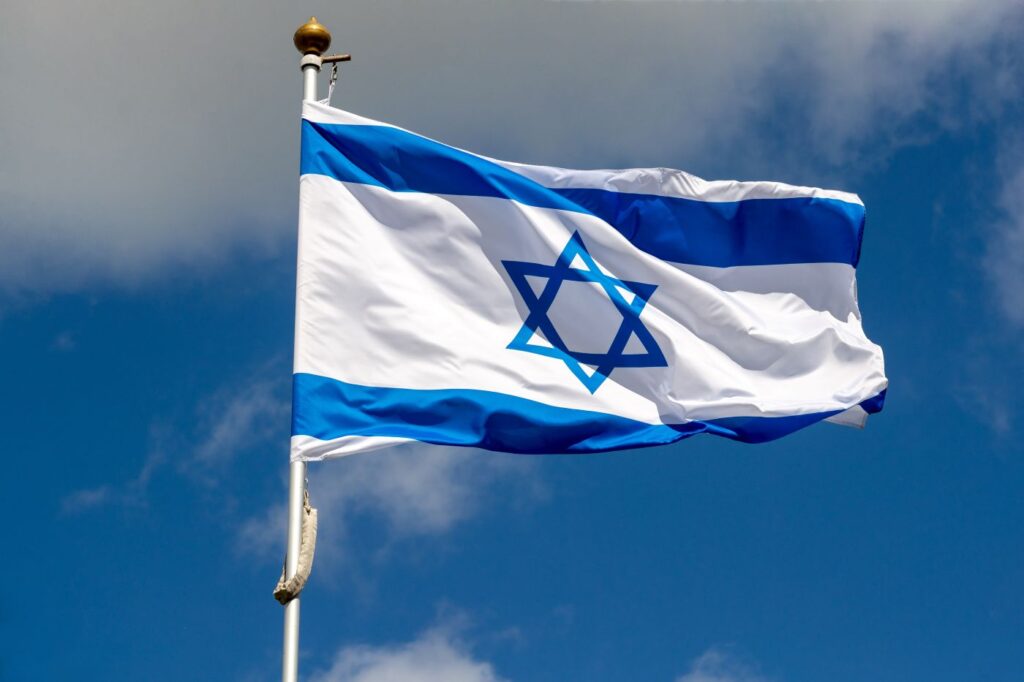
Editors’ Note: Tonight we are sharing a pair of essays, from opposing viewpoints, on the historic peace plan and its effect in Israel and across the West. We encourage readers to read and reflect on the essays together, as a pair, considering the nuances of each view.
Israel Rejoices at a Necessary Peace
Ben Freeman
Mackenzie France
An end to the longest war in Israel’s history finally arrived in October. President Trump’s plan offered Israel a comprehensive exit ramp in Gaza, achieving its remaining war goals. After the IDF has successfully, though at great human cost, decimated Hamas’s infrastructure, President Trump’s plan will, if seen through to fruition, see the terrorists removed from the governance ecosystem of Gaza and their military capabilities destroyed for good.
Crucially, the living hostages who languished in the dungeons of Gaza were finally returned home.
Start your day with Public Discourse
Sign up and get our daily essays sent straight to your inbox.Although Israel did not start the war in Gaza, it has suffered greatly both domestically and internationally as a result of the war’s prosecution. For the sake of Israeli society and for Israel’s place in the world, the seed of peace offered by President Trump’s plan must flower. Negotiations continue to be arduous, as a genocidal terrorist organization jockeys for its own survival, but Israel’s leaders must, amid every attempt by Hamas to destroy the ceasefire, keep their resolve. The people of Israel, and now the Israeli government, are aligned. The war in Gaza must not resume, and the process of rebuilding must begin.
The Cost Within Israel
The West has almost completely ignored the war in Gaza’s impact on the Israeli national consciousness. Our media are uninterested in the suffering of Israelis because they have been assigned the part of villains. Among the countless reports on the real suffering in Gaza, the attention given to the plight of the hostages or their families in Israel has been almost nonexistent. A particularly infamous incident here in the UK exposed this moral failing, when the Guardian was forced to retract a critical review of an October 7th documentary shown on a major UK television channel. In the review, the author bemoaned how Hamas was presented in the film. He complained that Hamas was portrayed as a “generalised menace” and “shameless civilian looters.” Many in our media class could not even find sympathy with Israelis on a day of tragedy, like October 7th, 2023. It is any wonder, then, that their suffering has been routinely ignored since?
The IDF is seen domestically as “the People’s Army,” a concept fundamental to Israel’s security and national identity (which has come under threat in recent years). Its standing army is built largely on the conscription of men and women who serve for a minimum of two years once they reach the age of eighteen, as well as reservists who are called up to serve their country in times of need. In the aftermath of the Suez Canal crisis, Davar, an Israeli newspaper, cast light on this model: “Our army is, as is well known, the people’s army, an army of reserves … the laborer and the teacher had one day laid down their daily work and stabilized the flag.”
Israeli society is therefore acutely sensitive to total war footing. There is no avoiding the fact that when reservists are called up, they are not working their regular jobs, a challenge for businesses and the wider economy. Michael Doran’s research on the Yom Kippur war has highlighted how Israel’s enemies have used this fact against it. Doran details how Sadat took advantage of the reservist model in 1973:
In response to the false signals in April, however, the Israelis carried out a partial mobilization, a step that was economically and politically costly, because, among other reasons, reservists are drawn from the most productive sectors of society.
In the aftermath of October 7th, 360,000 reservists were called up; tens of thousands have been called up on several occasions since then.
It is also difficult to encapsulate the effect that the taking of hostages on October 7th has had on Israeli society. In Judaism, there is a principle known as pikuach nefesh, which dictates that preserving a soul overrides all other responsibilities. When Gilad Shalit was taken hostage in 2006, millions of Israelis mobilized to call for his release. A mass campaign began, lasting years until Gilad’s eventual release. Alongside the yellow ribbons (the very same symbol that was once again used in the BringThemHome campaign), the campaign to free Gilad Shalit from Hamas captivity was characterized by posters bearing the words “Gilad is Alive,” a reminder of the responsibility the nation felt to preserve his life. When Gilad was eventually released in exchange for over 1,000 Palestinian prisoners, including Yahyah Sinwar, the architect of October 7th, almost 80 percent of Israeli society supported the deal.
The captivity of Gilad Shalit, just one hostage, throttled the Israeli people; October 7th saw 251 Israelis kidnapped to Gaza. Forty-eight Israelis remained in Gaza at the time the ceasefire was agreed. Now, all the remaining living hostages, as well as some of the bodies of the slain, have come home. For two years in Israel’s towns and cities, people could barely shift their gaze without having their attention drawn to a hostage poster. Thankfully, the close of this dark chapter is now almost in sight.
Now, after the ceasefire has held for a few weeks, the bodies of 13 hostages remain in Gaza. Though the terms of the agreement stipulated that the bodies should be released immediately, Hamas continues to stall. It is essential that the American and Israeli governments hold Hamas to its commitments, to the letter.
Beyond economic and social upheaval, perhaps the war’s heaviest cost for Israelis has been measured in lives. Since October 7th, nearly 1,000 Israelis have been killed in service. All levels of Israeli society have been affected; Gadi Eisenkott, former chief of staff of the IDF and a member of the 2023-2024 unity government’s cabinet, has lost his son and two nephews in the war. More than 20,000 IDF soldiers have also been wounded since the start of the war, a stark reminder of its true cost.
The Cost to Israel in the World
Another unjust casualty of the Gaza war is Israel’s international reputation. Countries that had previously flourishing relationships with Israel, such as Britain and France, have torched their relations with the Jewish state, allegedly due to Israel’s conduct in Gaza. The true motivations behind many Western admonitions of Israel are, of course, suspect, especially in the case of European countries. One does not have to look very hard to see through accusations and punishments as pieces of political theater. In the UK, our government has often resorted to grand gestures, like banning the Israeli government delegation from a major London arms fair. Look closer, and you will find that of course individual Israeli firms are welcome, many of whom are already essential parts of UK defense infrastructure.
The fact that the international community has a special grudge against Israel is a nigh-undeniable fact. From national parliaments to the UN General Assembly, many countries have used the years since October 7th to pursue vendettas and libels against Israel. The fairness of this situation, however, does nothing to change the material reality. Israel has had no choice for much of the last two years other than to disregard the platitudes of the international community, come what may, as it has dealt with an existential security threat. Now that there is a prospect of peace, Israel must acknowledge the hand that it has been dealt and strengthen its international partnerships, especially with moderate Arab states.
For most of Israel’s history, support from the West, though conditional, was by far more favorable to Israel than the offering of its neighbors, who sought nothing less than its destruction in the decades following its establishment. Now, the security dichotomy has changed. Israel has signed peace treaties with Jordan and Egypt, and the Abraham Accords have paved the way for new regional partnerships. These relationships were built largely through strength, deterrence, and the promise of prosperity. Israel has shown many of its neighbors that they stand to benefit more through peace than through conflict. Israel recognizes that for these relationships to endure, it must project strength.
For the accords to remain intact, Israel must demonstrate its value, post-October 7th failure. These nations who have opted for peace with Israel despise Hamas and the extremism the terrorist group represents. Simultaneously, they now want to see Israel relent and allow the work of rebuilding to begin. To their credit, Arab states have stepped up to President Trump’s proposal, offering support with internal policing and economic aid. An end to the war in Gaza offers Israel the opportunity to cement the Abraham Accords and potentially expand them.
Countries in the West, Israel’s historic allies, now want to see diplomacy too. There is a pattern of the West offering Israel five minutes of international sympathy in the wake of terror attacks, which is then followed by international condemnation once Israel’s response becomes too grisly for Western audiences. Ending the war in Gaza along the proposed diplomatic lines will not win Israel any acclaim from the “international community,” but it would dampen the endless criticism and condemnation that Israel currently suffers.
Many Western governments, especially those captured by anti-Israel political interests, will not jump to restore their relationships with Israel. Despite this, Israel must press on with this work, as international isolation is beginning to affect the Israeli economy. In August, the Times of Israel reported further economic slowdown as productivity continues to suffer, on top of large amounts of borrowing to fund the war machine. Whether by focusing on its Arab neighbors, or by offering innovations that the West simply cannot refuse, Israel is sure to find a way through this malaise. Israel has always been forced to play the hand it has been dealt on the international stage. A stable peace in Gaza is the first step in this important work.
David Ben Gurion elucidated Israel’s largely unchanged security doctrine as the following:
We must always remember one main rule—even though it is simple and self-evident—if we are forced to fight, we will not fight in the past but in the future. And what was successful in the past will not necessarily be successful and appropriate in the future … Alertness requires us to check our means of defense from time to time in light of the changing reality and to keep up with the times.
This strategy is broad and malleable but has manifested itself most clearly in Israel’s preference for fighting short and decisive wars. This model has allowed Israel to satisfy the concerns of the West once their sympathy expires, but has also been important domestically; “a security doctrine was formulated that strives for short and decisive wars, followed by long periods of quiet that will enable nation building and economic growth,” as Eran Ortal argues.
The war in Gaza was anything but short and decisive. The litany of political, social, and economic costs to Israel grew as the war persisted. It is a common adage of pro-Palestine activists that “this conflict did not begin on October 7th,” but for all intents and purposes, it did. In writing this essay, we acknowledge the unjust nature of the costs and consequences faced by Israel for a war that it did not want and did not start. At great human cost to Palestinians and Israelis alike, Israel has successfully neutered Hamas’s operational capability to the point where the organization is willing to at least engage with disarmament.
As the world watches to see how and whether the ceasefire continues to hold, it should be noted that Israel has already been rewarded for accepting the deal. Even if Hamas reneges on its commitments, Israel has begun the work of healing the nation’s soul with the return of the living hostages. In accepting this deal, Israel has also neutralized Hamas’s ability to use the hostages as human shields, a key strategic advantage.
For the sake of the now returned hostages, Israeli and Palestinian civilians, the Israeli economy, Israel’s international standing, and indeed for Israel’s national consciousness, Israel had to accept the deal brokered by the U.S. We are not naive enough to think that the final negotiation outcomes are entirely in Israel’s control; Hamas has scuppered peace negotiations since the very beginning of the war, but there is clearly something different about the Trump plan. Extensive buy-in from Arab states, concessions to allow Israel to feel comfortable with the day after in Gaza, and the prospect of exiling Hamas from Palestinian governance have combined to create a unique opportunity for peace. Israel took a courageous first step to return its hostages, and it must do everything in its power during negotiations to cement this peace. The costs of a return to war are already known, but the rewards of peace are now much more certain too.
Israel: A Model Ally, a Model Society
Eugene Kontorovich
President Trump’s historic Gaza Peace Plan, which stopped the war by making Hamas release the living hostages it held, is a good time to reflect on the broad sweep of the war in Gaza, both in the field and in the arena of public opinion. In the past two years, a country of ten million people, attacked literally from all sides, defied expectations by not only beating back its attackers, but also fundamentally reordering the Middle East. This triumph showed a level of social cohesion and patriotic dedication long unseen elsewhere in the West. At the same time, the country found itself a target of bogus accusations aimed ultimately at delegitimizing any free country’s resistance to a barbarian onslaught.
The Course of the War
Let us start not in Gaza, but with what was Israel’s more formidable foe to the north. Hezbollah’s arsenal of hundreds of thousands of missiles, amassed in southern Lebanon over two decades under the indifferent eyes of UN peacekeepers, was a Damocles’ sword over Israel’s head. Pre-war scenarios envisioned thousands of Israeli fatalities in a confrontation with Iran’s leading proxy force. Yet none of these scenarios came to fruition. Now Hezbollah is in tatters, the feckless peacekeepers are on their way out, and Lebanon’s president is publicly talking about peace with the Jewish state. In the process, Israel eliminated numerous senior terrorists who had been wanted for decades by the U.S. for their role in the mass murder of Americans. Despite the large bounties the U.S. put on their heads, no one could touch them: until Israel did. No other ally in recent memory has avenged attacks on Americans in such a manner.
Now, let’s turn east. Before the war, Iran was on the final lap of its decades-long race toward nuclear weapons, which would put it in a position to extort not just Israel, but the whole world. For decades, international affairs and security experts confidently opined that Israel lacked a serious military option against Iran’s nuclear program and that attacking Iran would unleash what even many on the right predicted would be “World War III.” Instead, Israel broke the illusion of Iranian invulnerability and set the weapons program back by years. In the process, it did not suffer a single military casualty.
The attack on Iran’s nuclear sites forged a historic new military partnership between Israel and the United States. In previous conflicts, the U.S. got bogged down with cumbersome and ineffective “coalitions of the willing.” With Israel, America had a one-state “coalition of the able,” which did most of the heavy lifting against the Islamic Republic (and its Houthi partners). This let the U.S. administer the final blow without putting a single soldier on the ground.
In the year leading up to Oct. 7, 2023, Israel faced a serious internal challenge as proposals for judicial reform led to divisive protests, funded in part by the Biden administration. Some air force pilots dramatically, but it turns out not sincerely, threatened not to defend the country. Social critics (and perhaps Hamas) read too much into this spectacle, which was really a melodramatic family quarrel. Israeli society came together with an unbelievable cohesion from the first day of the war to the last. Responses to call-up for reserve duty ran to 150 percent in the first days of the war. Even two years later, with hundreds of thousands of soldiers with jobs and families called up for hundreds of days, morale and participation remained extremely high.
Israel called up 360,000 reservists at the peak of the war. Yet there has been no large-scale draft evasion and shockingly little grumbling. The heroism, dedication, maturity, and sensitivity of nineteen and twenty-year old recruits stunned even old-timers who have seen their share of wars. The public weathered regular rocket barrages from Gaza and Lebanon, and more terrifying missile attacks from Iran and Yemen, with sangfroid.
What’s even more stunning is that throughout this two-year period, Israel’s fertility rate didn’t waver—in fact, there was a baby boom. Israel has the highest fertility rate in the West, with an average of 2.5 children per woman (more than three if counting only religious women), higher than any other OECD country.
There is a lesson here. Israel serves as an ideal ally for the United States and a role model to America’s treaty alliance partners. Israel mobilized more troops for active duty in this war than the combined mobilization potential of the United Kingdom, France, and a number of other NATO allies. America has spent untold billions on the conflict in Ukraine, which still has not introduced general conscription for eighteen-year-olds (though older cohorts are drafted), afraid the public would not bear it. America has troops deployed to Europe and Asia for countries that may not be willing to fight for themselves. On the other hand, Israel has taken on dedicated enemies of America, like Hezbollah and Iran, singlehandedly.
Israel fought for two years because it realized after October 7th that it could no longer survive surrounded by heavily armed Iranian proxies. It has now destroyed Iran’s so-called “Axis of Resistance” and instead is in peace negotiations with the former Iranian satrapies of Syria and Lebanon. This is the reason President Trump recently called Netanyahu “one of the greatest wartime leaders.”
The Genocide Libel
The past two years have also unleashed an extraordinary global wave of hostility to the Jewish state. Throughout history, critics of the Jewish people have not simply hated them without putative reasons. Rather, they have claimed that Jews were guilty, as a people, of certain egregious wrongs against mankind, from religious crimes of not accepting the salvation of Jesus, to more concrete offenses like usury, poisoning wells, spreading the plague, or in another century, spreading communism (or capitalism).
Today, a cosmopolitan commitment to a post-national, secular, borderless “global community” has replaced religion as the primary source of moral authority for Western elites. Thus it is not surprising that the accusations against the Jewish state have focused on the esoteric area of international law. Nor is it a coincidence that the arguments have coalesced around accusations of genocide, a term invented by a Jewish jurist shortly after World War II to provide a legal rubric for the Holocaust. The Holocaust has been the original sin hanging over the conscience of contemporary post-nationalist Europe. If Jews are genocidaires themselves, the moral wound of the Holocaust tends to fade, or at least be relativized.
From a legal perspective, the genocide accusation is simply incoherent. The principal argument behind the genocide allegation is that significant civilian casualties prove genocide. That is simply not true.
Civilian casualties and suffering are a tragic and inevitable consequence of war, and indeed, the principal reason why the unjust recourse to war, otherwise known as aggression, is so universally condemned. But international law does not criminalize civilian casualties. Rather, it forbids purposely targeting civilians. Targeting military facilities is legal, and indeed part of the inherent right of self-defense, even when civilian casualties are foreseeable. When a belligerent, like Hamas, places military infrastructure and combatants in civilian areas, it bears the legal and moral blame for resulting civilian casualties.
The well-documented use of civilians as human shields by Hamas has been reconfirmed in recent days. Now that a ceasefire has been declared, Hamas has opened a reign of terror on Gazans. Palestinian reporters say Hamas now operates out of headquarters in several hospitals; they have executed opposition members there. It even attacked one clan by disguising itself in ambulances. Now that it is not immediately relevant to Israel’s ability to defend itself, Hamas’s wide militarization even of medical facilities is no longer widely disputed; though Israeli attacks on supposedly civilian medical facilities were an ongoing trope during the war. Given that the Palestinian Authority itself revealed just years after Hamas took over the Strip that it had turned hospitals into terror facilities, the pretense of the media and human rights groups could be described as a blood libel.
According to Hamas’s claims, the total fatalities in Gaza over two years of war are approximately 65,000. There is considerable evidence that Hamas includes in this figure everyone who died in Gaza and those who were murdered by Hamas. It also includes Hamas members, who are entirely legitimate targets. Israel estimates it has killed 25,000 of them. This means, giving equal credit to Hamas and Israeli figures and discounting for those not killed by Israel, the civilian to combatant casualty rate is close to 1:1.
This is the opposite of genocide. It demonstrates the great precision of Israeli’s operations, even in the dense urban conditions in Gaza, and Hamas’s deliberate use of civilian facilities and civilian attire. Israel’s critics like to say it has dropped five or six times more explosive ordinance in Gaza than the equivalent of the Hiroshima bomb. (Of course, over the course of that war, and particularly over Tokyo, the United States deployed far more firepower.) Yet somehow Israel managed to do this with five or six times fewer civilian casualties, suggesting that, unlike the atomic bombing of Japan, the goal has not been to kill civilians, but to destroy militarized infrastructure like tunnels and booby-trapped houses. Moreover, the fact that Israel eliminated more than 90 percent of Hamas’s senior leadership, a feat almost unparalleled in any war, disproves the notion of “indiscriminate” attacks.
The accusation of genocide is not simply aimed at the Jewish state. If accepted, this redefinition of genocide fundamentally undermines American defense in the future and its legitimacy in the past. If the Gazan war was genocide, then the same can be said about the second Iraq war, Afghanistan, Vietnam, and certainly World War II, all of which had many more civilian casualties and a worse combatant-civilian ratio. America, under the standards now applied to Israel, is a perpetual genocidal power. The progressive left has long maintained this. But it is no coincidence that those on the right most critical of Israel’s conduct in the war have also begun “revising” the Second World War and even concluding that Hitler was not such a bad guy. The goal here is to convince Western countries that war as it has always been fought is now illegal, meaning they must give up on their inherent right to self-defense. Needless to say, nations outside the Judeo-Christian tradition—from Iran to China—are unlikely to play by these invented rules.
War and Christians
While the war, since the election of President Trump, found unprecedented support and cooperation with the United States, there has also been a deliberate and calculated effort to undermine support for Israel among its natural allies on the right. One example of this is the issue of churches in Gaza. During the two years of intense conflict, two churches were struck by Israeli munitions, one in October 2023, and one in July 2025. Both resulted in a tragic loss of civilian life. The IDF explained that in the first case, it was targeting nearby Hamas militants, and the second resulted from a misfired shell. It is well known that Hamas deliberately locates its facilities in and around protected sites, such as schools, mosques, and UN facilities. Moreover, Israel fired tens of thousands of munitions during the war. It is a tragic reality that in the fog of battle accidents will happen. Indeed, numerous friendly-fire incidents were documented; just as Israel was not “targeting” its own soldiers, it was not targeting churches.
But these two strikes in a long war were framed by some as Jews attacking Christians. This narrative only makes sense by harnessing anti-Semitic emotions. In the Vietnam War, the United States destroyed numerous North Vietnamese churches in strategic bombing, including the venerable Tam Toa Catholic Church, which was hit while serving as a shelter for refugees during the Tet Offensive. In World War II, thousands of churches were destroyed by the Allies while liberating Europe. No one would suggest that America was “anti-Christian” or had Christian blood on its hands because of these incidents. Indeed, both Vietnam and WWII, like the October 7th conflict, were wars against fundamentally anti-Christian forces.
The Peace Deal
Israel halted its military operations the moment President Trump announced all the hostages would be free. This again demonstrates that Israel’s goal throughout the war has not been to hurt Gazans, but to free its own enslaved and tortured citizens. Hamas could have ended the war a year ago, or two years ago. In this sense, Hamas is more deplorable even than Nazi Germany, which regarded its own civilian casualties as a tragedy, and took steps to keep them out of harm’s way, ultimately ending in surrender.
But while Hamas has been pressured by its backers to release the hostages, they have not abandoned any of their ideology. There will again be fighting in Gaza, but hopefully the temporary, relative calm will allow at least some to see the dishonesty of the characterization of the war by much of the media and international organizations.
Image licensed via Adobe Stock.