Editors’ Note: Public Discourse recently hosted an essay contest for students in high school, college, and graduate school. Participants were to answer the question: What do you wish your elders knew about the greatest challenge your generation faces? This essay is the first of two winning essays, written by Alfred Wright, a high school junior at the Mount Academy in Esopus, New York.
“They have an engine called the Press whereby the people are deceived,” says a character in C. S. Lewis’s That Hideous Strength. Although written in the 1940s, these words identify a problem—deception by the news media—that has only increased in the intervening years with the rise of more complex forms of communication. The deception practiced on us today is identified in Lewis’s book as well: scientific advancements that promise that an elite clique can live without suffering at the cost of other people’s lives, and manipulation of society into supporting these advancements using propaganda that plays on people’s desire to be part of that elite. My generation inherits a world where this way of thinking is already strong and is evident in many of the hot-button issues that are debated in the media and social media. Some of the crassest examples involve reproductive technologies that promise “designer babies,” transhumanism and medical modifications of human bodies to reflect perceived identities, and euthanasia. Because all these practices have at their base the idea that humans as they have been created are not uniquely valuable, they therefore also make it less difficult to accept deadly violence in the form of war, famine, the effects of the climate crisis, and modern slavery. Without rejecting the results of human ingenuity that benefit humanity, my generation’s challenge is to find a way to remember our place in the world and our purpose as humans.
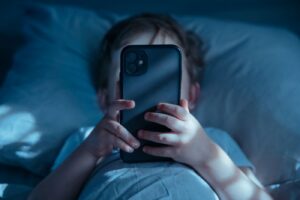
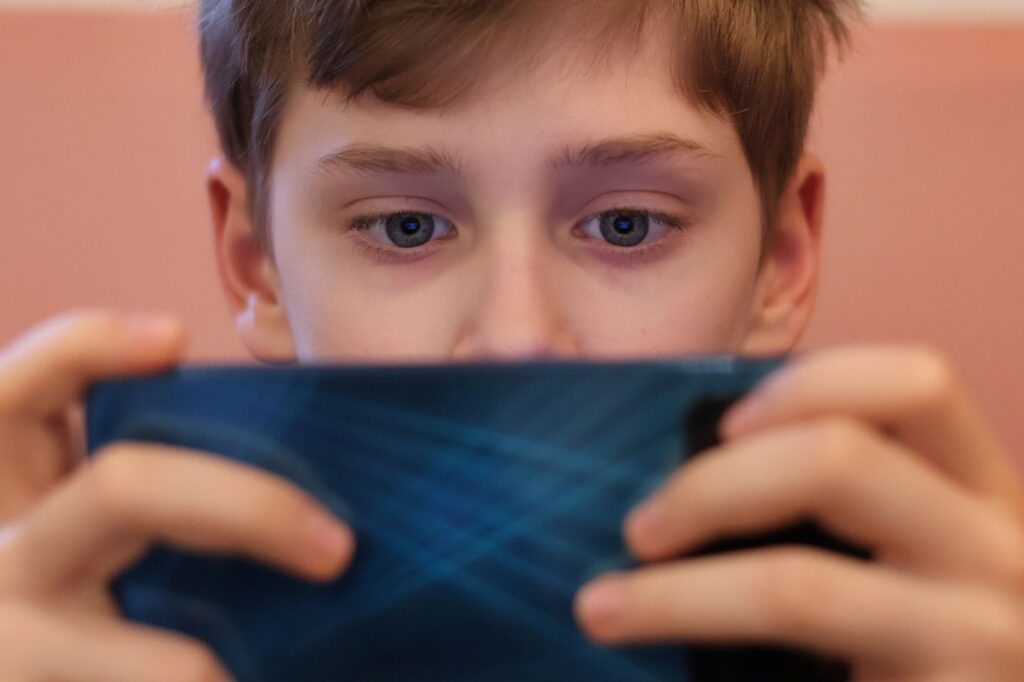
The means of deception in 2025 is not the printed daily newspaper described in That Hideous Strength, but a media ecosystem which provides a constant stream of information and misinformation. My generation has never known life without cellphones, and many of us spend more time on our phones than speaking to and learning from people around us, heedless of the effect on our physical and mental health. We are conditioned to believe whatever we see on our phones, and live increasingly in a digital world that doesn’t really exist, inventing little trends to keep ourselves entertained. Apps like TikTok and Instagram are designed to be addictive. Thus, much of my generation does not know a world where information and interaction are not at our fingertips.
Social media would be bad enough if it only distracted us. Like any other media source, the medium itself is neutral: a tool for expressing human thoughts. However, it is sinister when it becomes a device for spreading ideas that devalue human life and deceive us into believing that humans are not uniquely valuable. An obvious example is the concept of “designer babies” or embryos that are genetically screened for what are considered to be undesirable traits. The consequence of this practice becoming normalized will be that—if it is theoretically possible to have perfect babies—people born with disabilities will be sidelined and shunned even more than they are now. Parents could be condemned for bringing a “sub-par” baby into the world. Worryingly, some countries already boast of “eradicating” Down syndrome while in reality babies that may have Down’s are killed before they are born. Another harmful idea, transhumanism, argues that humans must transcend our physical forms into something bionic and better, with the hope of life prolonged beyond the normal human span held out as an incentive. Yet another manifestation of this way of thinking is the increase of legislation that allows people to “die with dignity” or with the assistance of a physician. Not only is the morality of such legislation suspect, but its very existence calls into question the value of a human life. It is essentially suicide condoned by society in the name of dignity and self-determination. The existence of these laws will and has resulted in pressure on disabled or poor people to end their life like this to avoid feeling that they are a burden. Another popular but mistaken idea is that it is not worth bringing children into the world due to the climate crisis. If it is not worth bringing babies into the world, why bother living is the next step of this train of thought.
The existence of these dangerous ideas is made worse by artificial intelligence and large language models which manipulate the quality and type of information we receive, and thus how we interact with each other. As Mr. Weasley warns his daughter Ginny in Harry Potter and the Chamber of Secrets, “Never trust anything that can think for itself if you can’t see where it keeps its brain.” A world where you don’t know whether a picture you see is of a person or an AI image and where an AI chatbot can “dialogue” seemingly as a conscious being is profoundly disorienting. A recent social media post about AI images warned, “You don’t want to live in a world where everything you see is fake. It’s gonna damage us in ways we probably can’t even predict.” Eventually this will result in humans being sidelined, as trust in each other is eroded by a flood of information which we don’t know whether to trust or not. In a recent article, Jeffrey Bilbo characterizes AI as “a technology suited to a decadent culture” and warns of the “seductive power such tools exercise over us.” AI offers seemingly limitless answers to difficult questions, but these answers are not drawn from a framework that values the human person.
Start your day with Public Discourse
Sign up and get our daily essays sent straight to your inbox.Ideas that affect our perception of the value of humanity and the potential of artificial intelligence are troubling, because just by existing they shift people’s perspective on what humanity is and what its purpose is. It’s obvious from reading the news that these ideas are influential in the minds of many wealthy and powerful people. With regard to transhumanism Peter Thiel said in a recent interview that, “We want you to be able to change your heart and change your mind and change your whole body.” The disquieting idea that the human form is not good enough reinforces the concept that human life has marginal worth: changing the form designed for us by God is the beginning of renouncing our connection with him. The cause of the problems I have described is the deification of science and technology; as one of the members of the scientific N.I.C.E. Institute in That Hideous Strength says, “If Science is really given a free hand, it can now take over the human race and re-condition it: make man a really efficient animal.” In the book, there is a grim fate for those who deify progress over humanity and begin trying to tamper in God’s domain.
* * *
For the past three summers, I have worked all day in a community vegetable garden of about ten acres. The produce we grow—tomatoes, zucchini, cucumbers, sweet corn, green beans, squash, and pumpkins—feeds around three hundred people. Some days it’s just the main gardener and me, sometimes there are up to seven people hoeing, weeding, and watering. We use regenerative agriculture, which focuses on bringing health to the soil, so we refrain from using pesticides and herbicides. Instead, we fertilize the land using a formula called compost tea, a murky concoction that consists of worm castings, or vermiculture, to fertilize the soil. We also do not till or cultivate the fields, favoring a no-till method with mulch so as not to damage the soil biome. This method of farming increases productivity in all our crops, is less work to manage, and makes me feel like I’m in partnership with the Earth. Now that we’re getting toward the end of summer I especially enjoy harvesting: going out first thing in the morning and selecting ripe vegetables which fill bin after bin. Last week I brought home a dozen tomatoes, which my mom made into a salad while my brother and I grilled chicken. Then my family of seven sat down around our table and shared a meal. I’m lucky to have experienced a way of life in the outdoors without the distractions and deceptions of the digital world.
Ideas that affect our perception of the value of humanity and the potential of artificial intelligence are troubling, because just by existing they shift people’s perspective on what humanity is and what its purpose is.
Over time, regenerative farming methods can restore health to soil that has been damaged by commercial farming and heavy use of pesticides. The same must be true for people. The single greatest challenge facing my generation as we enter the adult world is to remain truly human in the face of ideas and trends that confuse and deceive. The Tower of Babel became a symbol of error instead of the monument to human achievement that it was supposed to be. Why? Because God saw what its builders intended and that “now nothing will be restrained from them, which they have imagined to do” (Genesis 11:6). Those who built it forgot that there are more important things than the fame and success which would “make [them] a name” (Genesis 11:4). But God confounded their plan, and the Tower of Babel became a symbol of division and scattering. My generation must find a way for new technologies to support the intrinsic value of each human rather than working at the expense of humanity. At the end of That Hideous Strength, the two main characters, having learned to value each other’s humanity and to accept the limitations and the blessings of the human body, enter a kind of new Eden. I wish my elders knew that, in the face of what seems to be an increasingly frightening technocratic reality, we want to live free from deceit and as true humans.
Image licensed via Adobe Stock.