A Reflection for a New Year

The antidote to despair is not perfect politics, an impossibility, a mere ideology; the cure is hope. Moral panic reveals despair at the state of things: craving the fullness of the kingdom of heaven now, but upon discovering decadence and depravity—and who can deny our time’s troubles—responding with the sadness of despair. Despair cannot be overcome with certainty or perfection, but only by hope and the truth of concrete action undertaken in the light of hope.
Worlds of Christmas Wonder

Perhaps our longing for Christmas past reminds us that here we have no lasting city—not even a lasting home. In this way, our celebration of Christ’s coming points us toward what it makes possible: our coming to him in heaven, when our longing will be fully satisfied, when we will truly come home.
The Forgotten Tragedies of the Christmas Story
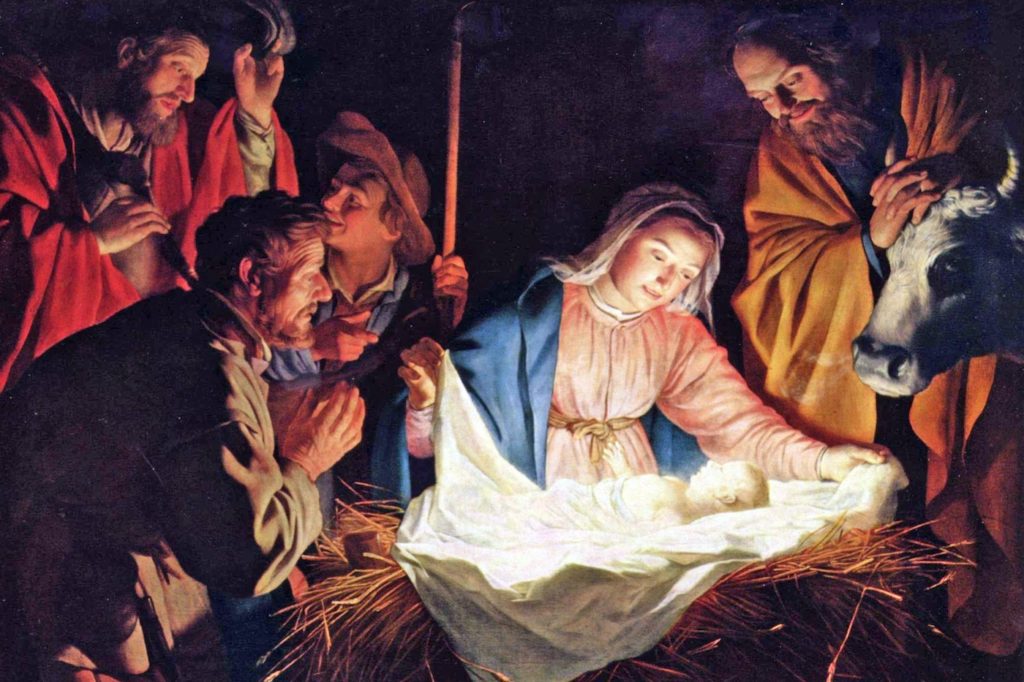
Christ’s advent is an astonishing story of God’s power and light breaking into our darkness, doubt, and suffering.
Christmas and Western Civilization

Though Christmas is a religious holiday, secularists should appreciate its great contribution to Western Civilization: the lesson that all men are equal in their fundamental human dignity.
Chesterton’s Christmas
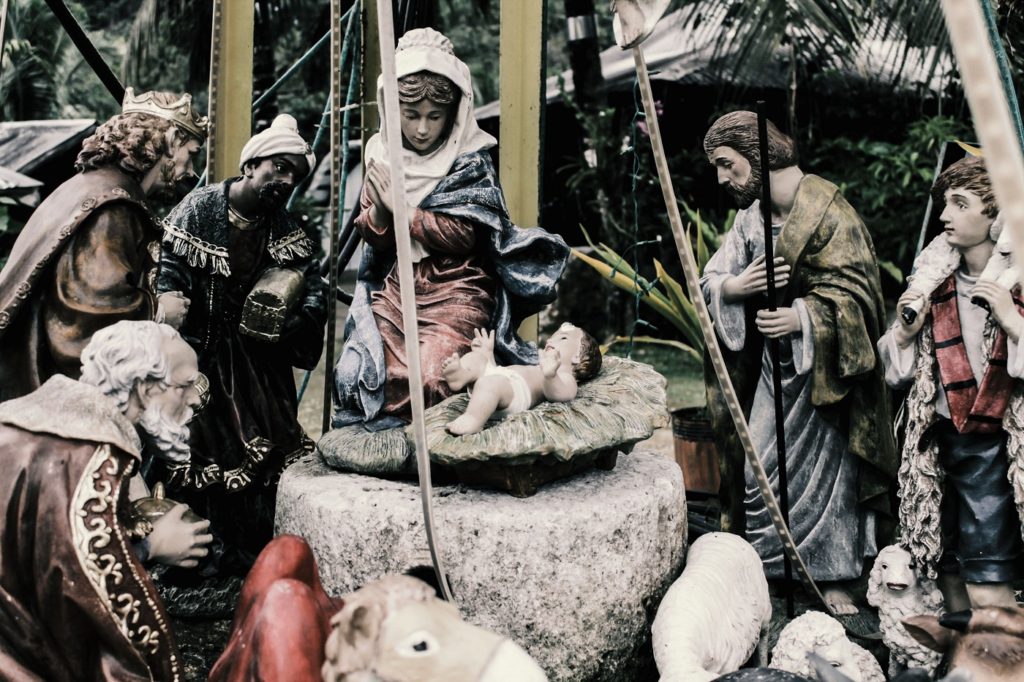
In “The God in the Cave,” G.K, Chesterton explains that when Christians celebrate the Nativity, they are celebrating an event that changed the course of history and permanently transformed the DNA of human society.
Christmas for Grownups

Christmas teaches us this great mystery: the truth of Trinitarian love is so beautiful and heart-breaking that it could only be communicated in the form of a child.
There and Back Again: The Supreme Court’s Establishment Clause Journey

We stand at the dawn of a new era in an important realm of constitutional law. As we step into this new dispensation, Agreeing to Disagree will serve well as a road map and guidebook to what comes.
Liberalism and the Politics of Theism

If religious believers want to protect politics from atheistic materialism, their political theory should presume at least that God made human nature good and free, and that evil comes rather from our misuse of nature. Genuine liberalism, Augusto Del Noce argues, is such a theory.
The 2023 Public Discourse Book List

Our reading recommendations from a year of contemplation and enchantment.
Biden’s Child Welfare Rules Will Make Foster Kids Homeless for the Holidays

I hope more Republicans join us in supporting this legislation. I hope Democrats join us, too. The greater our numbers, the stronger our message to the Biden Administration: this Christmas, foster children deserve a warm, loving home, not a cold night on a homeless shelter cot.
The Place of Economics in a Classical Education

Whatever approach is best for your students at your school, know that you are serving not just the mind but the whole person. To educate the whole person, we must not leave gaps where others may rush in to fill the void. Economics began with the late scholastics and ought to continue today as part of a full classical curriculum.
Gratitude, Now More Than Ever

As we close out this year and approach the next, we should remember that gratitude is not an incidental or secondary civilizational value. It is the backbone of a free and decent civilization. Those who embrace barbarism love destruction and revolution because they have been trained to detest everything that came before them. But just as the heroic and imperfect Americans who came before us moved history through reflection and choice, we can write the American future by recommitting our educational institutions to gratitude.
Canada Is Not Only Euthanizing Persons but Personhood Itself

Much work must be done to restore the proper understanding of personhood—what it means to be human—in societies that permit euthanasia. This work will take not just years, but decades and possibly even longer than that.
Taxes Have Consequences: An Interview with Arthur B. Laffer and Brian Domitrovic

Whenever you redistribute income, you never actually redistribute income. You destroy total income completely. Every revolution on planet Earth has been fought in order to change the distribution of income. Not one of those revolutions has ever succeeded in redistributing income, but all of them have succeeded in destroying the entire quality and quantity of total income.
Friend of the Court, Friend of the Truth: An Exchange Between Politico and Robert P. George

I am quoted extensively in Ms. Przybyla’s piece based on responses I made to inquiries she directed to me by email. So that readers can assess for themselves the fairness and integrity of Ms. Przybyla’s reporting, I will here post, in its entirety, the communications between us.
In the City of Slaughter

Like the verses of Bialik’s “In the City of Slaughter,” those stories had warned me of the horrifying vulnerability of the Jewish people, and of the enormous sacrifice and resolve it would take to overcome it. On October 7th, I realized how utterly wrong I had been to regard them, merely, as history.
Empowering People through a Renewed Sense of Place

Crucially, Kaplan sees the fragility of American life not just in the low-income neighborhoods of inner-city Philadelphia, but in the isolation of otherwise well-off suburbs. His goal is to resurrect the idea of the neighborhood as a specific place with a distinctive sense of community. It’s a cultural narrative that runs counter to a mentality that prioritizes mobility over stability.
Can Objective Morality Make a Comeback?

Laws and moral prohibitions—even seemingly obvious ones like the prohibition of killing innocents—do not function in a vacuum; their meanings and powers stem from a prior metaphysical order, independent of any individual’s perception, in which they originate and can be understood.
The Master of Machiavelli
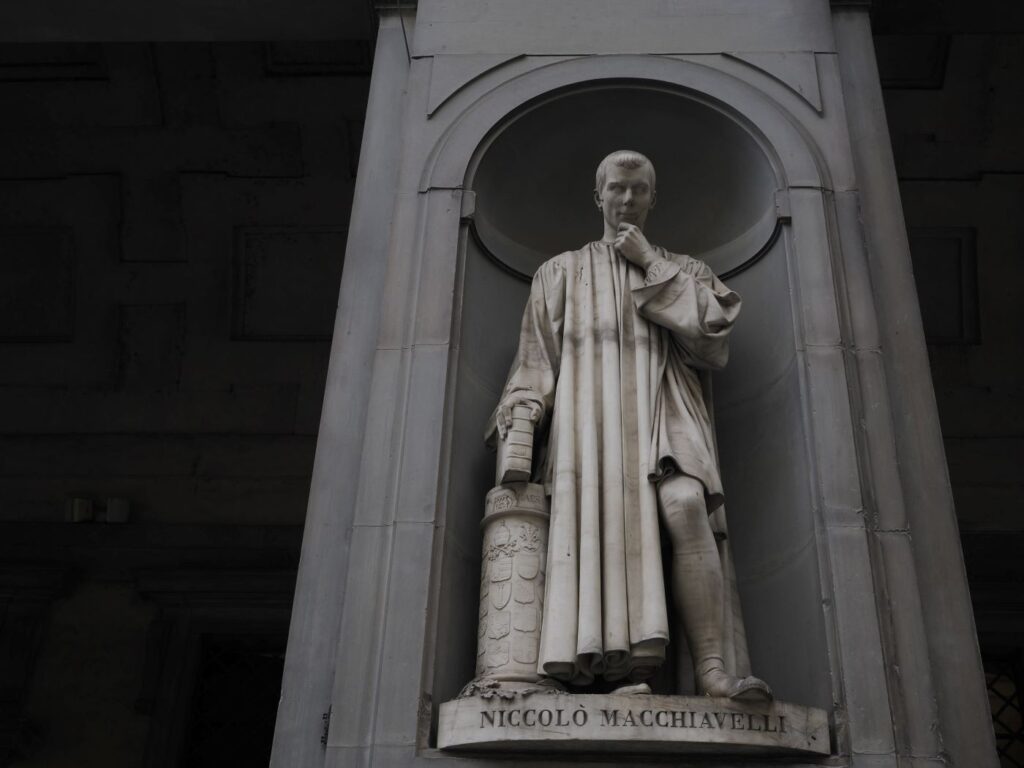
Mansfield’s Machiavelli’s primary goal is to subvert and overturn Christianity. It is important to note, as Professor Mansfield does himself, that this reading of a secular, indeed anti-Christian, Machiavelli is not the only reading of the Italian philosopher.
The Intellectual Life: Hope for the Rest of Us

Welcoming human imperfection in its manifold expressions is a boon for those of us who lack the privilege of full-time scholarship. It is not in spite of, but thanks to, the inherent inefficiencies of our rich and often chaotic lives that so many of us can enjoy the pursuit of intellectual enrichment.
C. S. Lewis and the Populists: A Birthday Appreciation
At a moment when the values Lewis cherished often seem endangered as much by their supposed friends as by their proclaimed enemies, we would do well to remember his prescriptions.
How the United Nations Declaration Failed

The primordial failing of the UN Declaration’s proponents was that they drank too deeply from the well of postwar optimism. While they were rightly horrified by the brutality of the Second World War, they rebuilt neither with a tragic sense nor with due attentiveness to human limitations. Instead, they rebuilt with comic ambitions.
Technology in the Family Home: Add before You Subtract

There is no shortage of opinions on how to manage the ubiquity of technology. Every parent will have his or her own opinion on these matters. But there is one key, frankly very uncomfortable, factor without which even the best of such ideas are sure to fail our kids: that at least in part, responsible technology use is caught, not taught. The modeling parents offer matters a great deal. And we do not always model well.
Flourishing in Work and Family Life: Considerations for Young Women

Six panelists share how they structure their lives in a way that allows them to pursue creative, intellectually inspiring work, while remaining open to life and faithful to the good work of the home.