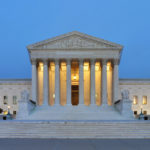
Several weeks ago, in Trump v. CASA, Inc., the Supreme Court put an end to universal or “nationwide” injunctions. These are federal district court rulings that bar the president from applying an executive order to anyone, not just the plaintiffs, while a case goes forward. Before the Court’s decision, litigants could shop around for a sympathetic federal judge (there are nearly 700), any of whom could unilaterally freeze a presidential order.
The ruling was a big win for Trump in the context of his flood the zone strategy. In the first hundred days of his second term, Trump issued more executive orders than any president in history, largely to overwhelm the courts, media, and organized opposition. He knew he would face a flurry of nationwide injunctions and that some of his executive orders, on review, would be found unconstitutional. When the birthright citizenship order was universally enjoined, instead of defending its constitutionality, he used the opportunity to challenge the legality of universal injunctions. Now, the Supreme Court has removed the main obstacle to the expeditious implementation of facially unconstitutional presidential orders. Trump celebrates the decision for this reason.
But the six justices in the majority were not seeking to assist President Trump. They invalidated universal injunctions because they are originalists, and the injunctions (a) are inconsistent with the original meaning of the Judiciary Act of 1789 and (b) lack close analogues in the history of American and English equity practice (see the Court’s opinion, III, 5–19). That’s why, for centuries prior to the 1960s, American judges never used the tool. They didn’t think it existed.
Notably, Justices Sotomayor and Jackson, in their dissents, question the majority’s motives. Sotomayor wonders why the Court has chosen the birthright citizenship applications, “of all cases,” to evaluate the legality of universal injunctions. Jackson describes the Court’s core originalist argument as a “smokescreen.” Sotomayor accuses the Court of “shamefully . . . [playing] along” with Trump’s gamesmanship. The dissenting justices suggest, in other words, that their colleagues in the majority accepted the case and sided with the government not for principled reasons, but to advance an unstated conservative or pro-Trump political agenda.
These suspicions are ill-founded for two reasons. First, the timing of the case is easily explained: the use of universal injunctions has exploded over the last ten years, and especially the last half-year, making the question of their legality urgent for the first time in American history. The Court states this clearly (II, 4–5). Second, Justice Barrett, who wrote the majority opinion, and Justices Roberts and Kavanaugh, who joined, have repeatedly shown a willingness to side with liberal colleagues and endure vitriolic criticism from conservatives. Roberts, for example, faced withering attacks for twice upholding President Obama’s Affordable Care Act. Barrett recently drew the ire of Trump supporters for requiring the Trump administration to release $2 billion in funds to USAID.
Start your day with Public Discourse
Sign up and get our daily essays sent straight to your inbox.Originalism and Results-Driven Jurisprudence
The majority and dissenting opinions illustrate an important difference between originalists and nonoriginalists. According to originalists, the judge’s role is to ascertain and uphold the law’s historical meaning, regardless of political consequences, and regardless of the judge’s, or the public’s, views. The originalist holds that if a statute or constitutional provision is immoral, damaging, or outdated, the people, speaking through their elected representatives, must repeal, revise, or replace it. Although originalist judges differ in many ways—e.g., how they define historical meaning or read the historical record, or the weight they give to precedent—they universally affirm the need to adjudicate without regard to political consequences or their own beliefs.
Nonoriginalists do not uniformly espouse these principles. Some, like Justice Brennan (1956–90), explicitly reserve the right to impose their own views of the Constitution’s “essential meaning” when those views are not shared by the general public. Others freely admit that they factor political consequences into their judgments. Both Sotomayor and Jackson, for example, base their dissents in Trump v. CASA, Inc., at least in part on the anticipated effect of the ruling. Without universal injunctions, both emphasize, the judiciary will be much less able to freeze facially unconstitutional executive orders. The Court “[openly invites] . . . the Government to bypass the Constitution,” states Sotomayor, and “largely grants” the Government’s “request for . . . permission to engage in unlawful behavior,” writes Jackson.
The Court does not evaluate these claims because “policy pros and cons are beside the point ” (III, 21). As private citizens, the justices in the majority may object to Trump’s hardball tactics and favor new legislation that would curb such action in the future. But as judges, they have to ask whether nationwide injunctions, whatever their effects, are unlawful. In their judgment, they are, and just as the lower courts exceeded their legal authority in issuing them, the Supreme Court would be exceeding its legal authority if it permitted them for the supposed good of the system. “No one disputes,” the Court writes, “that the Executive has a duty to follow the law. But the Judiciary does not have unbridled authority to enforce this obligation.”
Sotomayor and Jackson do diverge in a noteworthy respect. In her dissent, Sotomayor argues for the legality, not just the positive effects, of nationwide injunctions and accepts that historical meaning and practice, while not necessarily dispositive, matter a great deal in determinations of legality. She spends an impressive fifteen pages attempting to show that universal injunctions are, in fact, “firmly grounded in centuries of equitable principles and practice.” Jackson, by contrast, focuses exclusively on the consequences of the Court’s decision and evinces a dismissive impatience in response to its historical argument. She describes Barrett’s lengthy attempt to demonstrate that universal injunctions lack close past analogues as a “mind-numbingly technical query” and, later, as “legalese.”
As any originalist will say, the task of ascertaining the original meaning of an old statute or constitutional provision, or of understanding a particular aspect of the American legal tradition, requires complex historical investigation. Assuming Justice Jackson understands this, she could only have two reasons for dismissing the Court’s originalist analysis: it is a “smokescreen” that does not merit a good-faith reply, or in-depth historical understanding just isn’t worth the effort. Either way, one wonders how seriously she takes questions of legality, independently of consequences, as a matter of principle.
Playing Constitutional Hardball
The case is instructive in relation to larger questions of partisan polarization and democratic stability. In 2018, Harvard political scientists Steve Levitsky and Dan Ziblatt published the bestseller How Democracies Die, which inspired President Biden to run in 2020. Democracy, the authors note, is not just a set of formal rules and procedures. It rests on various norms and unwritten rules, especially forbearance. For democracy to survive, they write, public officeholders must exercise “restraint in their deployment of institutional prerogatives.” The opposite of forbearance is constitutional hardball, the practice of exploiting law and procedure—i.e., stretching the rules to their limits—to vanquish one’s political opponents.
Norms of forbearance have been eroding for decades, and Levitsky and Ziblatt assign primary blame to the Republican Party. The authors focus, in particular, on Senate Republicans’ heavy use of holds and the filibuster to stymie the Obama administration. Had they been writing today, they would have added to the list (quite rightly) Trump’s failed effort to reverse the 2020 presidential election and, more recently, his flood the zone strategy and the various measures his administration has taken to punish individuals and organizations opposed to him.
But ironically, Levitsky and Ziblatt, like many progressive analysts, fail to recognize the subtler, more effective hardball on the other side of the spectrum. Take the public sector. In the federal civil service, registered Democrats outnumber registered Republicans by a ratio of nearly two to one. The ratios are far higher among public school teachers and public university professors. Although in theory, these public servants discharge their responsibilities in a nonpartisan manner, in practice, political lopsidedness in public institutions has biased policy implementation, learning environments, and academic research to the left for generations.
Or take the judiciary, more relevant for our purposes. Although in theory, federal judges interpret the law in a nonpartisan manner, the empirical record suggests a systematic pattern of progressive judicial activism and conservative judicial restraint over the last two to three generations. Nationwide injunctions, for example, have a distinctly liberal tilt. Federal judges universally enjoined a whopping 29 percent of Trump’s first-term executive orders, compared to just 2 percent under Bush and 4 percent under Obama. These injunctions predated Trump’s flood the zone strategy, and more than 90 percent were issued by Democratic appointees. The number fell to 9 percent under Biden and rose again to 16 percent during the first hundred days of Trump’s second term—a remarkable ratio given the unprecedented volume of executive orders issued during that time. Now that nationwide injunctions are off the table, Justice Alito worries that judges will resort to a new hardball tactic: the “unscrupulous” certification of nationwide class actions (see his concurring opinion). That may have begun to happen already.
Justices Sotomayor and Jackson insist that in voting to uphold nationwide injunctions, they sought only to protect the rule of law and were not behaving as partisans. Sotomayor implies that she would have issued the same judgment if the executive order in question, instead of denying birthright citizenship, had ordered the confiscation of guns from law-abiding citizens. That may be true. But it is well documented that for several decades, conservative Supreme Court justices have decisively broken ranks more often than liberal ones. More consequentially, since the 1960s, liberal judges have tendentiously interpreted the Constitution and federal statutes to enshrine partisan rights such as abortion and same-sex marriage and advance partisan causes such as greater racial diversity in higher education and the workforce.
This pattern of judicial asymmetry should not surprise us. As noted, originalism instructs judges not to consider political consequences or impose personal views. Nonoriginalist approaches give judges more room to maneuver, with predictable results.
President Trump plays extreme hardball by American standards, some of it blatantly authoritarian. Conservatives lose credibility when they deny this. But Trump’s election and reelection were, in part, a reaction to decades of undemocratic progressive change in the courts, bureaucracy, and public education—itself a kind of hardball. Liberals who deny or downplay these phenomena only feed populist anger. In order to break the cycle of partisan polarization in this country, both sides will have to play their part.
Image by Alexander and licensed via Adobe Stock. Image resized.