Search Results For:

Search Results for: patriot – Page 3

This moment, among other things, may call for something as banal as looking around, embracing and underscoring the figures and images that capture what is enduringly good about normal American life.
Conservative political action can, in fact, be a bulwark of counterrevolution. This is why Whittaker Chambers was a “conservative of the heart,” even if he did not consider himself a “conservative of the head.” In the final analysis, he was a witness to the permanent things.
Ultimately, the defeat of these terrorist groups is the primary ethical imperative. This will benefit not only Israel but also the Gazan civilians who suffer longer under their terrorist leaders and the continuous warfare that they breed. There is a moral cost to not acting decisively, and a strategic cost to forgetting the moral justification for killing in war.
Is there friction between the social proclivities generated by our liberal institutions and the demands of Christian faith and teaching? It is perfectly reasonable to argue that there is—though there may be fruitful interaction as well, in which the politics of freedom and the virtues of faith foster one another.
According to Nichols, Aristotelian human flourishing requires piety,  the acknowledgment that humans are akin to the divine but cannot be divine themselves. The task of the political community is to support the life of piety.
As we close out this year and approach the next, we should remember that gratitude is not an incidental or secondary civilizational value. It is the backbone of a free and decent civilization. Those who embrace barbarism love destruction and revolution because they have been trained to detest everything that came before them. But just as the heroic and imperfect Americans who came before us moved history through reflection and choice, we can write the American future by recommitting our educational institutions to gratitude.
Lamenting the violations of our past and celebrating the achievements of the present, the ancillary role of DEI would serve to exalt personhood and the communion of culturally rich community without qualification as the life of any institution.
November is a month for looking back in gratitude at where we have been, where we come from, who has trod the boards of our stage before us. Gratitude is the proper spirit to lift us up during these shorter, colder days (at least in these latitudes), while the seasonal life of nature turns with the leaves and falls with them to the ground.
The scope of the crisis of masculinity is unchartered territory for America and the broader West. Yet many of the most exaggerated masculine traits have an ancient ancestry and can be traced back to one of the greatest works of the Western canon.
We do not need more self-conscious crusaders for the nation or even for Western Civilization, but instead more priests, teachers, businessmen, artists, writers, and parents who perform their own activities faithfully, serving—to borrow a phrase from Russell Kirk—as “leaven for the whole lump.”
In his new book, William Inboden clearly regards Reagan as indispensable to something coming close to a miraculous chain of events surrounding the peaceful end of the Cold War. He rejects the popular notions of Reagan as clueless, all form and no substance, gullible, or hopelessly and sentimentally patriotic. This is a sympathetic biography, but one that is copiously researched and laden with fresh and insightful nuances that treat Reagan as a complex figure, a man with limitations, paradoxes, and weaknesses.
Mark David Hall’s Proclaim Liberty Throughout All the Land represents a landmark contribution to the debate over the impact of Christian faith on American law and culture. It is high time for Christians to reframe this debate, asking not “How much do we have to apologize for?” but “How much can we take credit for?”
What is useful is inherently teleological: calling something “useful” invokes the question “useful for what?” But modernity resists this question by multiplying means without any clear ends. We live an infinite regress of usefulness with little sense of the point of our labors. In a world that only understands useful things, interest in humanities and religious faith (both of which consider human purpose) will inevitably decline.
Before modern economists claimed a monopoly on the topic of scarcity, philosophers, artists, and theologians spent centuries arguing over the nature and limits of our desires.
Fidelity to place, to the community of one’s birth, is not merely one virtue among others, but a foundational and formative source of our character. We first learn to be faithful husbands and wives from the unchosen example we witness of our own parents. We first learn to be faithful citizens as we explore the small postage stamp of terrain that we did not choose to go to, but simply awakened to with our first dawn of consciousness.
What would happen if we dropped that charged word “liberalism” from the conversation and got down to specifics? I suspect much of Patrick Deneen’s postliberal magic would disappear.
Nature has to be understood and respected for people to be happy.
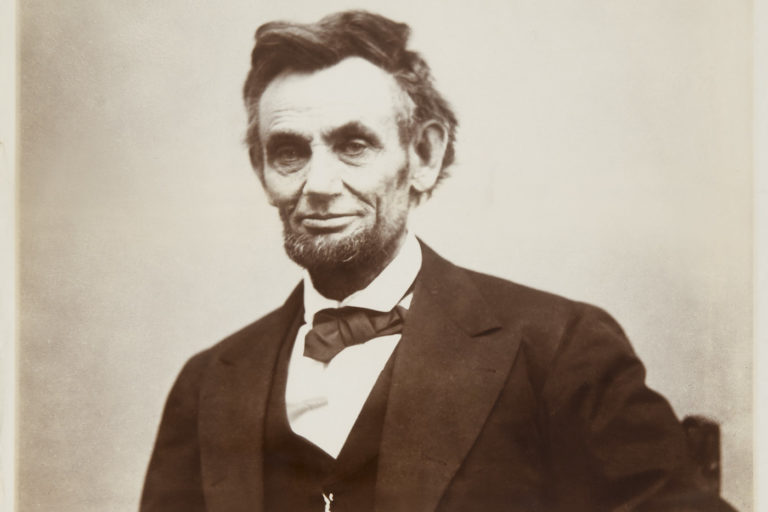
Lincoln saw the fundamental problem in democracy as one single, monstrous question: “Can the principle that liberates all and produces self-government remain disciplined and restrained enough in practice to retain self-government?”
Ernst Jünger’s 1957 novel, The Glass Bees, is prescient. But it also clarifies many of our own present challenges as we struggle with the role of technology over our lives. In a society defined by sound bites, 280-character tweets, three-minute TikTok videos, and deep fake videos, the line between what is authentically real and what is mere performance or imitation is blurred.
Renewals, revivals, and awakenings are unpredictable, by definition. Christians should not credulously accept them as de facto works of God just because they’re on the news, or on YouTube. But sometimes they produce godly results that last for generations: lives transformed and renewed, people called into vocational ministry, and communities brought to greater wholeness.
An explanation for the military’s recruitment challenges goes deeper than trends in the labor market. Ultimately, the civic honor on which voluntary service depends has quietly been eroding for some time, and is being replaced by an ethos of individual self-fulfillment.
Art is a convening point for many different avenues of pursuing beauty. It is the bridge between chemistry and history and between theology and engineering. Beauty is something every specialist cares about, even in the fields that seem most technical.
Key Founders believed that America’s future was to be a polity in which free and dynamic commerce would play a powerful role in defining society, as opposed to, say, the priorities of aristocratic or feudal societies. The “republic” side of this political economy equation is that this commercial society would operate within the context of institutions and sets of virtues that draw upon classical, religious, and moderate Enlightenment sources.
Life’s biggest questions are almost never resolved to everyone’s satisfaction, and if we don’t study the differences between the Epicureans and the Stoics, between Locke and Rousseau, and between legal originalists and non-originalists, we are missing out on our own music: sometimes a battle of the bands, sometimes cacophony, always fascinating.